
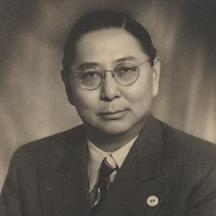
Sun Fo
| Name | Sun Fo |
| Title | Chinese politician (1891-1973) |
| Gender | Male |
| Birthday | 1891-10-21 |
| nationality | Taiwan |
| Source | https://www.wikidata.org/wiki/Q701897 |
| pptrace | View Family Tree |
| LastUpdate | 2025-01-16T23:42:01.092Z |
Family Tree
Tap  to expand more relatives
YouTube
Introduction
Sun Ke, courtesy name Zhesheng, was born on October 20, 1891, in Cuiheng Village, Zhongshan City, Guangdong Province. He was the eldest son of the renowned revolutionary Sun Yat-sen. His father, Sun Yat-sen, was a leader of China's modern republican revolution, and his mother was Lu Mu-Zhen. Sun Ke’s ancestral home is in Shangsha, Dongguan, Guangdong, with family lineage tracing back to migrations from the late Yuan and early Ming dynasties to areas around Nanxiong and Dongguan.
In his early years, Sun Ke moved with his mother to Macau, and later to Hong Kong. After the failure of the Guangzhou uprising in winter 1895, Sun Yat-sen sent Sun Ke and his mother to Honolulu (now in Hawaii), where his elder brother Sun Mei took care of them. From a young age, Sun Ke excelled academically, studying in private schools and beginning his enlightenment education at age 7 with texts like the "Three Character Classic," laying a strong foundation for his early learning. In 1901, he attended the St. Anthony School operated by the Catholic Church, where he achieved outstanding results and completed an eight-year curriculum in three years. The following year, he entered St. Louis College in Honolulu, embarking on his Western education.
In 1910, Sun Yat-sen was active in revolutionary activities in Honolulu. Sun Ke decided to devote himself to the revolutionary cause, joining the Tongmenghui (Chinese Revolutionary Alliance), and participated in editing "Freedom News" and "Loud Voice Weekly." After graduating in 1911, he furthered his studies at California State University, engaging in editing work for the Overseas Chinese-founded "Morning Post of Young China." Following the outbreak of the Xinhai Revolution, Sun Ke actively promoted revolutionary ideas, interrupted his studies, briefly returned to China, and in 1912, resumed studying in the U.S., studying both liberal arts and sciences. In 1916, he obtained a master's degree in economics from Columbia University.
Sun Ke returned to China in 1917, serving as Sun Yat-sen’s secretary and involved in the affairs of the Guangzhou Provisional Government. In 1920, he became the mayor of Guangzhou and the supervisor of the Yellow River, actively promoting urban development. He drafted the "Guangzhou Municipal Organization Regulations" and planned the city’s governance. He served again as mayor in 1923, advancing municipal construction and raising funds for the Whampoa Military Academy.
In 1924, he was dispatched to Shenyang to contact the Feng regime warlord Zhang Zuolin, seeking cooperation between the north and south. After Sun Yat-sen’s death, Sun Ke became one of the witnesses to his "Last Will." In 1925, Sun Yat-sen established the Grand Marshal’s Office, and Sun Ke served as a member of the National Government and the Central Military Commission. In 1926, he was elected as a member of the second Central Executive Committee of the Kuomintang and also served as the Director-General of Guangdong provincial government construction.
During the Northern Expedition, Sun Ke oversaw railway transportation, ensuring the supply of military supplies. In 1927, he served as Minister of Finance and Minister of Construction for the Nanjing government, actively improving transportation infrastructure, advocating for railroad construction, and promoting transportation development. He also presided over the founding of Transport University to cultivate transportation professionals. During the Second Sino-Japanese War, Sun Ke worked to improve China-Soviet relations, signing the "Sino-Soviet Non-Aggression Pact" and making several visits to the Soviet Union.
Politically, Sun Ke espoused democracy and constitutionalism, advocating gradual reform. However, due to factional struggles within his party and changing national circumstances, he was unable to fully realize his political ideals. In 1946, he served as a member of the Presidium of the Constitutional Assembly; in 1947, he became deputy chairman and president of the Legislative Yuan. In 1948, to oppose Chiang Kai-shek’s regime, he coordinated with various factions in Guangdong to form a provisional government.
In 1949, Sun Ke went to Hong Kong and later moved to the United States. During this period, he lived modestly, devoting himself mainly to reading and writing. In 1965, he was invited to return to Taiwan, where he was received by Chiang Ching-kuo and others, returning to the political stage and serving in important advisory roles such as a consultant on constitutional matters. On September 13, 1973, Sun Ke passed away in Taipei at the age of 83, and was buried at Yangmingshan, Taipei.
Throughout his life, Sun Ke authored works such as "Urban Planning," "Introduction to Advertising Psychology," "Selected Speeches of Sun Zhesheng," and "Collected Works of Sun Ke." He was also skilled in calligraphy, with regular script influenced by Yan and Liu styles, and running script inherited from the "Two Wangs" (Wang Xizhi and Wang Xianzhi). As both a politician and scholar, a cultural worker, he made significant contributions to China’s modernization.
