
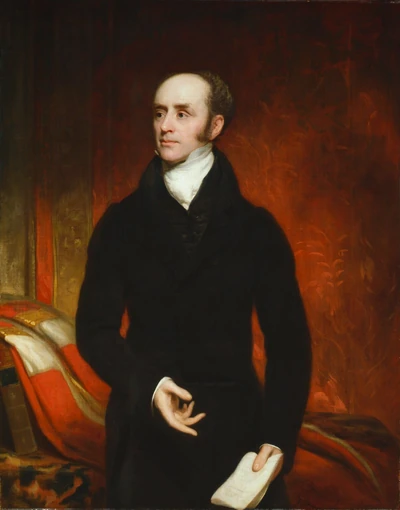
Charles Grey, 2nd Earl Grey
| Name | Charles Grey, 2nd Earl Grey |
| Title | Prime Minister of the United Kingdom of Great Britain and Ireland (1764-1845) |
| Gender | Male |
| Birthday | 1764-03-13 |
| nationality | United Kingdom of Great Britain and Ireland |
| Source | https://www.wikidata.org/wiki/Q294662 |
| pptrace | View Family Tree |
| LastUpdate | 2025-11-26T23:22:40.962Z |
Family Tree
Tap  to expand more relatives
Introduction
Charles Grey, 2nd Earl Grey (13 March 1764 – 17 July 1845), was a British politician associated with the Whig party. He served as Prime Minister of the United Kingdom from 1830 to 1834. His government was responsible for passing significant reforms, including the Reform Acts of 1832, which expanded the electoral franchise in England and Wales, and the Scottish and Irish Reform Acts of the same year. Additionally, his administration enacted the Slavery Abolition Act of 1833, which abolished slavery throughout the British Empire.
Early Life and Education:
Grey was born at Fallodon in Northumberland, England, into a prominent landowning family. His father was Charles Grey, who achieved the rank of general and was ennobled as Baron Grey in 1801 and later upgraded to Earl Grey in 1806. His mother was Elizabeth Grey of County Durham. Grey was the second son but the eldest surviving son in his family.
At age six, Grey attended a school in Marylebone for three years before transferring to Eton College. However, he did not retain fond memories of his time there. In 1781, he entered Trinity College, Cambridge, but did not complete a degree, which was not uncommon at the time. His education was further supplemented by a Grand Tour across Europe, visiting regions in southern France, Switzerland, and Italy.
Political Career:
Grey's political career began when he was elected as Member of Parliament (MP) for Northumberland in a 1786 by-election, facilitated by his uncle Sir Henry Grey. He entered the House of Commons at age 22 and initially maintained a stance of political independence, though he soon aligned with Whig circles and was a supporter of Charles Fox. His early speeches included an attack on William Pitt the Younger's Commercial Treaty with France in 1787, which gained him recognition.
In 1792, Grey co-founded the Society of the Friends of the People, advocating for parliamentary reform with a focus on moderation. He actively called for reforms to the electoral system and participated in debates regarding Ireland and reforms in the populace’s representation. He was re-elected unopposed in 1796 and continued to advocate for reform measures.
In 1801, Grey inherited Howick Hall after the death of his uncle and was granted a peerage as Lord Howick, which moved him to the House of Lords. Despite his peerage, he maintained an interest in parliamentary politics. During the early 1800s, Grey held various government positions, including roles in coalition ministries and as First Lord of the Admiralty.
Ministries and Reforms:
In 1806, Grey was appointed Lord of the Admiralty in the government known as the Ministry of All the Talents. The following year, he became Foreign Secretary and leader of the Whigs after Charles Fox's death. His tenure as Foreign Secretary was short-lived, as the ministry resigned in 1807 over disagreements related to Catholic emancipation and other issues.
He played a pivotal role in passing the Slave Trade Act of 1807, delivering a significant speech in favor of the bill in the House of Commons. The act abolished the transatlantic slave trade within the British Empire.
Prime Ministership:
Grey became Prime Minister in 1830 after William IV asked him to form a government following the resignation of the Duke of Wellington. His administration was marked by efforts to reform parliamentary representation and to address issues of social justice, notably through the 1832 Reform Act and the abolition of slavery.
Resignation and Later Life:
He resigned as Prime Minister in 1834 due to disagreements within his cabinet concerning policy in Ireland. After leaving office, Grey retired from active politics.
Family and Personal Life:
Grey was involved in a notable affair with the married Duchess of Devonshire, which produced a daughter raised by Grey's parents. Later, he married Mary Ponsonby, with whom he had fifteen children.
His name is also associated with Earl Grey tea, which bears his title.
