Hosokawa Morihisa
| Name | Hosokawa Morihisa |
| Title | (1839-1893) |
| Gender | Male |
| Birthday | 1839-04-14 |
| nationality | Tokugawa shogunate |
| Source | https://www.wikidata.org/wiki/Q11606002 |
| pptrace | View Family Tree |
| LastUpdate | 2025-11-17T06:47:36.463Z |
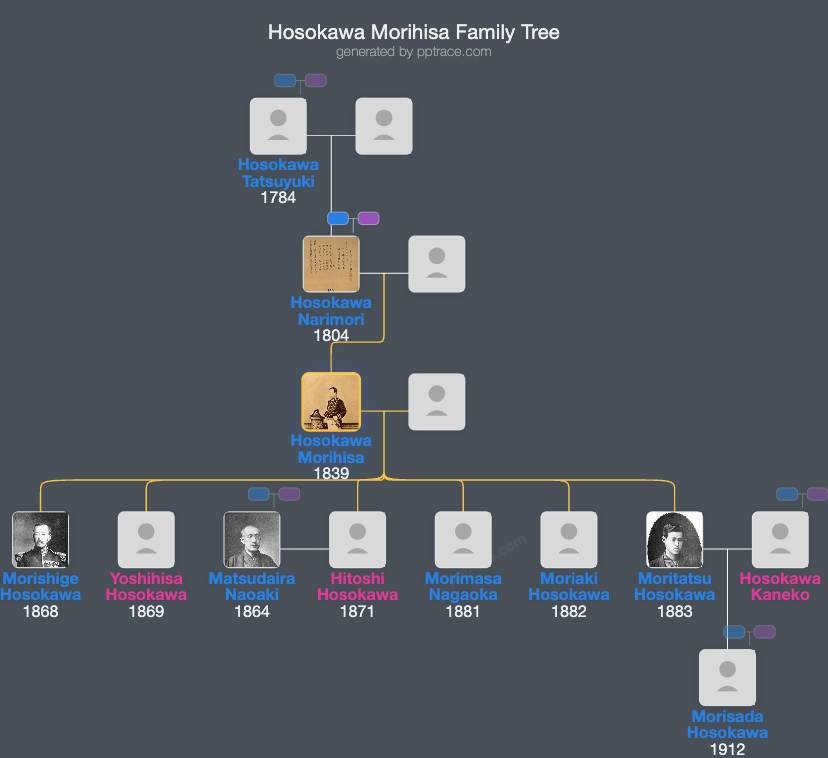
Family Tree
Tap  to expand more relatives
Introduction
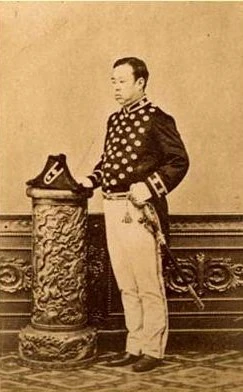
Morihisa Hosokawa (born March 1, 1839 – died September 1, 1893) was a noble and politician during the early Meiji era. He served as the second lord governor of Kumamoto Domain in Higo Province and was granted the title of Marquis. He held the rank of Junior Second Rank and the Order of the Rising Sun, Second Class.
Born as the third son of the lord of Kumamoto Domain, Hosokawa Sadanori, on March 1, 1839, in the tenth year of the Tenpō era. His childhood name was Yoshinosuke (or Minozuke), later changed to Morihisa, taking a character from his father’s name. Initially, his surname was Nagasaki.
Upon his father’s death, he assumed the role of proxy successor for his older brother, Keijun, who became the domain lord. In September 1863, he traveled to Kyoto and engaged actively in national affairs alongside his younger brother, Nagasaki Morikimi. During the late Edo period, he worked alongside Fukui Domain Lord Matsudaira Yoshinaga (Shungaku) and Aizu Domain Lord Matsudaira Katamori to strengthen the imperial court and shogunate alliance, also negotiating with the imperial court as a representative of Keijun.
In 1866 (Keio 2), he became the adopted heir of his brother Keijun. When Tokugawa Yoshinobu became the last shogun in the same year, Hosokawa received his courtesy name, "Kimitsugu," and adopted the name "Kimitatsu" (Nobutaka) following Kumamoto Domain’s tradition. His involvement with court and shogunate officials prompted him to lean more toward the new Meiji government over time.
On January 3, 1868 (Keiō 4), during the Battle of Toba–Fushimi, he is said to have escaped the fighting and safeguarded the Imperial Palace. On January 12 of the same year, he was appointed to the council (Gitei), and later served as the chief of criminal law affairs. On April 23, he changed his name from Kimitatsu to Morihisa.
In 1869 (Meiji 2), he was appointed to a consultative role but resigned in May due to illness. Following his older brother Shōkuni’s retirement in 1870 (Meiji 3), Morihisa succeeded as the domain governor. He promoted reforms such as the abolition of the domain’s auxiliary taxes totaling nine-tenths of the domain’s income, the destruction of Kumamoto Castle, and the establishment of a domain assembly. These policies involved figures like Yamada Taketomo, a disciple of Yokoi Shonan, as well as Riji Taketsu, wealthy farmers such as Takezaki Ritsujirō, and Tokuhiro Ikkō.
Prior to the abolition of the han system and prefecture establishment, he advocated early on for the abolition of domains and was officially dismissed on July 14, 1871. The same year, he became the governor of Shiraku Prefecture (present-day Kumamoto Prefecture).
During the Satsuma Rebellion in 1877, he toured various parts of Kumamoto, working to quell unrest among former samurai and assisting those affected by the conflict.
In 1884, following the enactment of the Peerage Law, he was elevated to Marquis and received various honors such as cups and medals beginning in 1885. In 1887, he was promoted to Senior Third Rank.
On February 1890 (Meiji 23), he was appointed to serve as a member of the House of Peers, and he died on September 1 of the same year at age 55. His heir was his eldest son, Morinari, followed by his fourth son, Moritatsu.
His honors include his elevation to Marquis in 1884 and subsequent awards of various orders and ranks.