Edward Smith-Stanley, 13th Earl Of Derby
| Name | Edward Smith-Stanley, 13th Earl Of Derby |
| Title | British politician (1775-1851) |
| Gender | Male |
| Birthday | 1775-04-21 |
| nationality | United Kingdom of Great Britain and Ireland |
| Source | https://www.wikidata.org/wiki/Q335754 |
| pptrace | View Family Tree |
| LastUpdate | 2025-11-26T23:29:13.443Z |
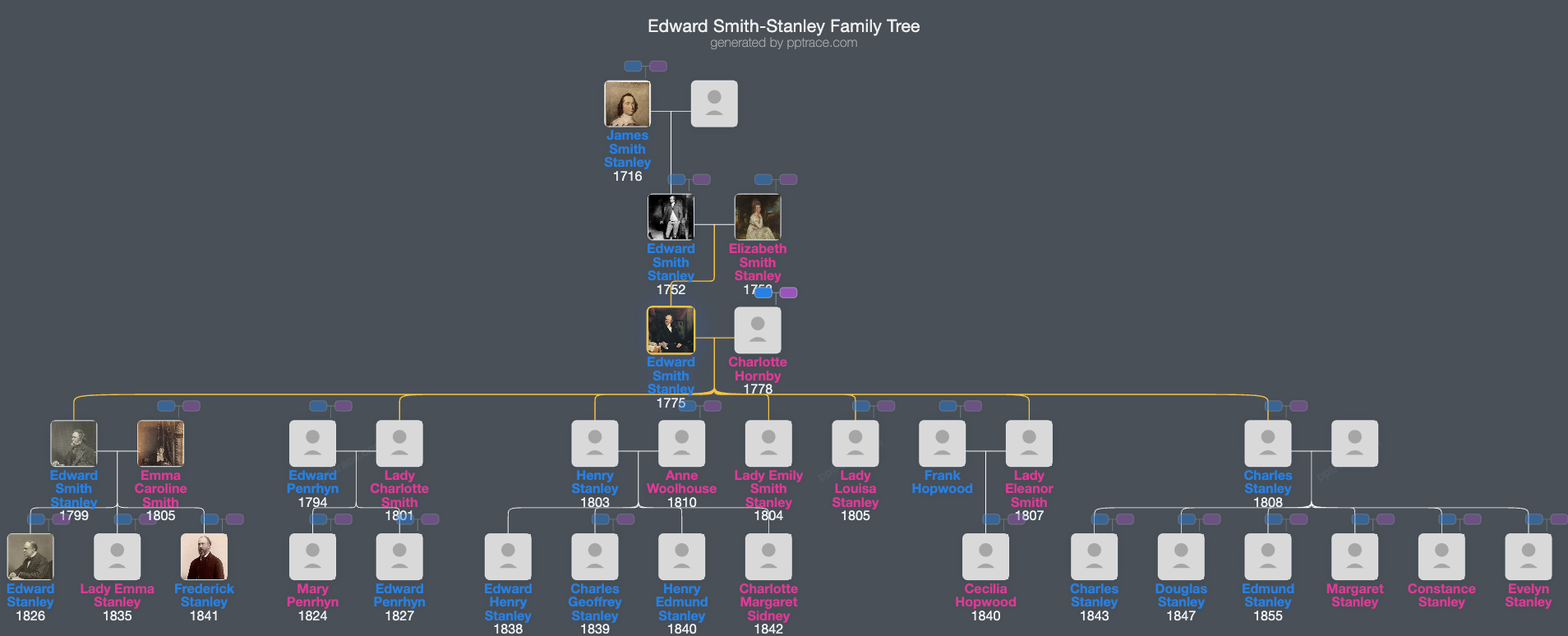
Family Tree
Tap  to expand more relatives
Introduction
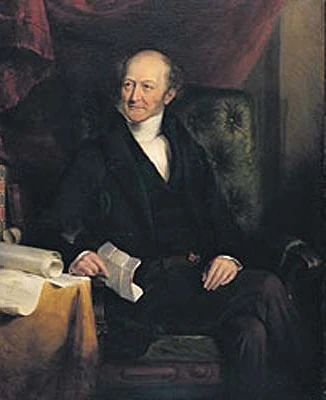
Edward Smith-Stanley, 13th Earl of Derby (21 April 1775 – 30 June 1851), was an English peer, politician, landowner, naturalist, art collector, and builder. He was styled Lord Stanley from 1776 to 1832 and Baron Stanley of Bickerstaffe from 1832 to 1834.
Origins:
He was born in 1775 as the eldest child and only son of Edward Smith-Stanley, 12th Earl of Derby (1752–1834), and his wife Elizabeth Hamilton. Elizabeth was the daughter of James Hamilton, 6th Duke of Hamilton.
Education and Early Career:
He attended Eton College and Trinity College, Cambridge. On 10 November 1796, he was appointed Deputy Lieutenant of Lancashire. In the same year, he was elected Member of Parliament for Preston, serving until 1812. Afterward, he represented Lancashire in Parliament until 1832.
Military Service:
He was commissioned as Colonel of the 1st Royal Lancashire Supplementary Militia on 1 March 1797, a regiment that later became the 2nd Royal Lancashire Militia. He received a brevet promotion to colonel in the regular army with seniority from that date. His rank was retained until the regiment was disembodied at the end of 1799. He resigned his military commission on 13 April 1847.
Nobility and Natural History:
In 1834, he succeeded his father as the Earl of Derby. Subsequently, he withdrew from active politics and focused on his natural history collection at Knowsley Hall near Liverpool. His collection included a large number of live animals—at his death, records show 1,272 birds and 345 mammals. Many specimens were shipped from explorers like Joseph Burke.
He was President of the Linnean Society from 1828 to 1833. Several species were named in his honor, including the Derbyan parakeet (Psittacula derbiana). An Australian parrot species named Platycercus stanleyii by Nicholas Vigors in 1830 was initially associated with him but was later deemed an invalid name due to prior publication. The State Library of New South Wales acquired six volumes of his natural history drawings, which date from early British settlement in New South Wales.
In 1851, he established the Derby Museum at Knowsley Hall, which is now part of the World Museum, among the oldest institutions in the National Museums Liverpool group.
Marriage and Children:
On 30 June 1798, he married his cousin Charlotte Margaret Hornby (d. 1817), the second daughter of Rev. Geoffrey Hornby of Scale Hall. Charlotte's brother was Edmund Hornby, MP for Preston, who married Lady Charlotte Stanley, the Earl's sister.
Their children included:
- Edward George Geoffrey Smith-Stanley, 14th Earl of Derby (1799–1869), who served as Prime Minister three times.
- Lady Charlotte Elizabeth Smith-Stanley (1801–1853), married Edward Penrhyn.
- Hon. Henry Thomas Smith-Stanley (1803–1875), MP for Preston.
- Hon. Emily Lucy Smith-Stanley (1804–1804), died in infancy.
- Hon. Louisa Emily Stanley (1805–1825), married Lt.-Col. Samuel Long.
- Lady Eleanor Mary Smith-Stanley (1807–1887), married Rev. Frank George Hopwood.
- Colonel Hon. Charles James Fox Stanley (1808–1884), married Frances Augusta Campbell.
He died at Knowsley Hall on 30 June 1851.