Spencer Compton, 2nd Earl Of Northampton
| Name | Spencer Compton, 2nd Earl Of Northampton |
| Title | English politician (1601-1643) |
| Gender | Male |
| Birthday | 1601-05-01 |
| nationality | Kingdom of England |
| Source | https://www.wikidata.org/wiki/Q337036 |
| pptrace | View Family Tree |
| LastUpdate | 2025-11-26T23:20:48.250Z |
Family Tree
Tap  to expand more relatives
Introduction
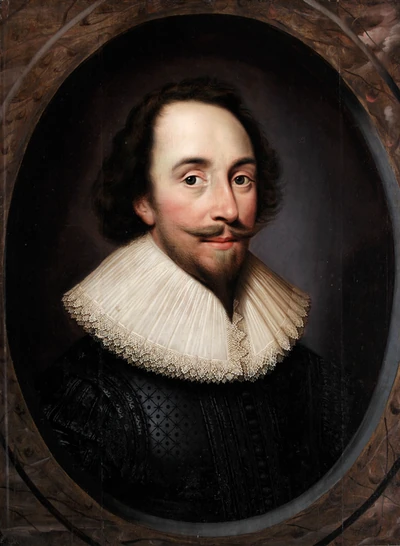
Spencer Compton, 2nd Earl of Northampton (born May 1601, died 19 March 1643), was an English nobleman involved in military and political activities during the early 17th century. He was known as Lord Compton between 1618 and 1630 prior to inheriting the earldom.
Born into the Compton family, he was the son of William Compton, 1st Earl of Northampton, and Elizabeth Spencer, the daughter and heir of Sir John Spencer, Lord Mayor of London. On 3 November 1616, he was appointed a Knight of the Bath. In the political realm, he was elected Member of Parliament for Ludlow in 1621 and served until 1622. During this period, he was also appointed Master of the Robes to the Prince of Wales and accompanied the prince on his trip to Spain in 1623. He supported King Charles I’s military campaigns in Scotland and provided advice on convening Parliament, describing the latter as "like the dew of heaven."
In 1626, he was elevated to the peerage as Baron Compton via writ of acceleration. Following his father's death in 1630, he inherited the earldom and took on additional responsibilities, including roles as Lord Lieutenant of Gloucestershire and Warwickshire.
During the English Civil War, Northampton was tasked with executing the Commission of Array in Warwickshire. He participated in the Battle of Edgehill and was given military command of Banbury and the surrounding areas in November 1642. In December 1642, he successfully relieved Banbury from parliamentary forces, aided by Prince Rupert of the Rhine. In March 1643, Northampton attempted to relieve Lichfield but was unsuccessful; he then occupied Stafford. On 19 March 1643, he led troops, including three of his sons, and engaged in the Battle of Hopton Heath. During the battle, he defeated parliamentary cavalry and captured eight guns but was ultimately surrounded while leading an advanced charge. He refused to surrender, reportedly stating that he scorned to take quarter from the enemy, and was killed by a blow to the head. His death was considered a significant loss to the Royalist cause, according to Edward Hyde, 1st Earl of Clarendon.
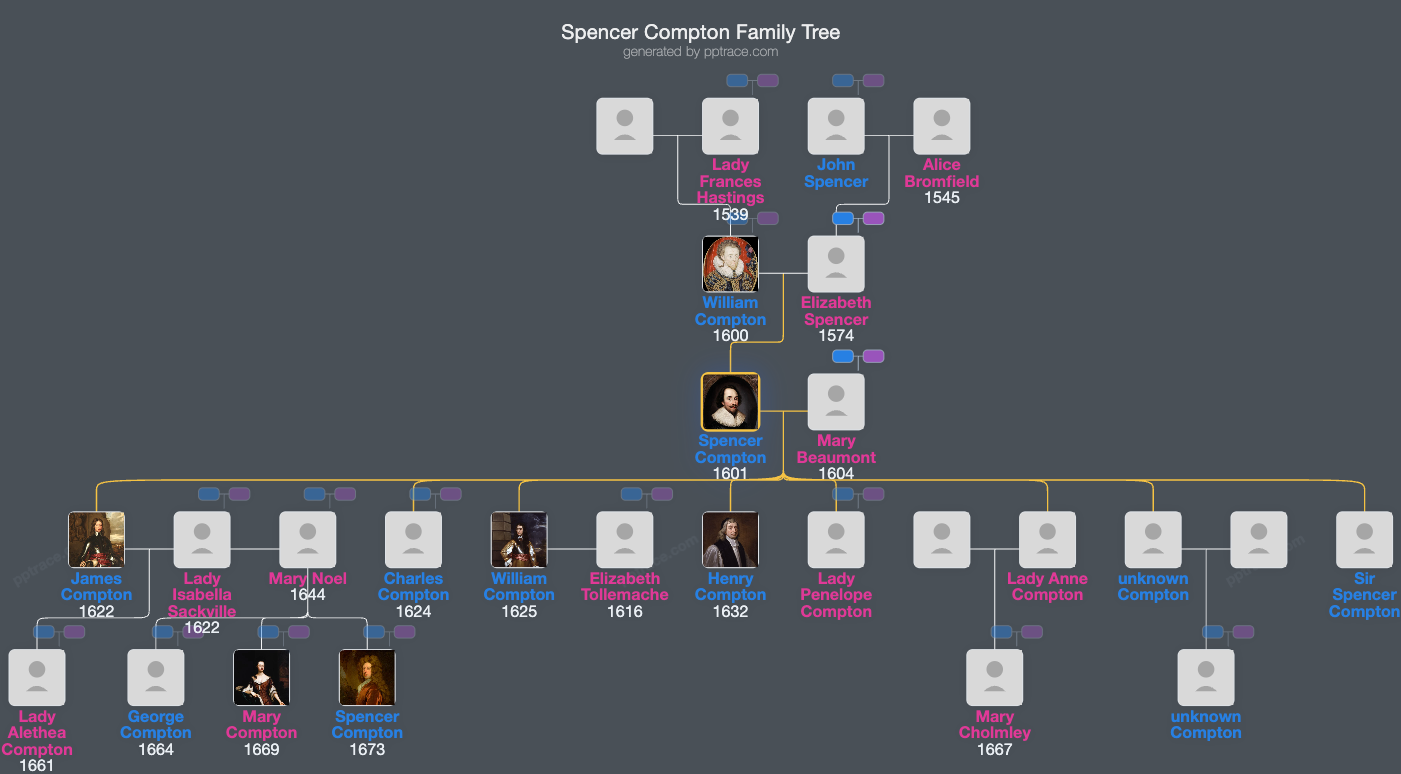
Northampton married Mary Beaumont, daughter of Sir Francis Beaumont and related to Mary Villiers, Countess of Buckingham. They had two daughters and six sons. The four eldest sons fought as Cavaliers during the Civil War, often appearing together in action:
- James (1622–1681), succeeded as the 3rd Earl of Northampton.
- Charles (circa 1624–1661), served as Member of Parliament for Northampton in 1661.
- William (circa 1625–1663), was an original member of the Royalist organization The Sealed Knot.
- Spencer (circa 1629–1659), was knighted in 1643, the same day as Charles and William, and died in Bruges.
- Francis (circa 1629–1716), was Member of Parliament for Warwick from 1664 to 1679.
- Henry (1632–1713), served as bishop of London from 1675 until 1713.
His daughters included Anne, who married Sir Hugh Cholmeley, 4th Baronet and MP for Northampton and Thirsk, and Penelope, who married Sir John Nicholas, MP for Ripon from 1661 to 1679. Mary, Countess of Northampton, died in London on 18 March 1654.