Ōkubo Masuko
| Name | Ōkubo Masuko |
| Title | (- 1878) |
| Gender | Female |
| Birthday | — |
| nationality | Japan |
| Source | https://www.wikidata.org/wiki/Q24877052 |
| pptrace | View Family Tree |
| LastUpdate | 2025-11-17T06:49:02.732Z |
Family Tree
Tap  to expand more relatives
Introduction
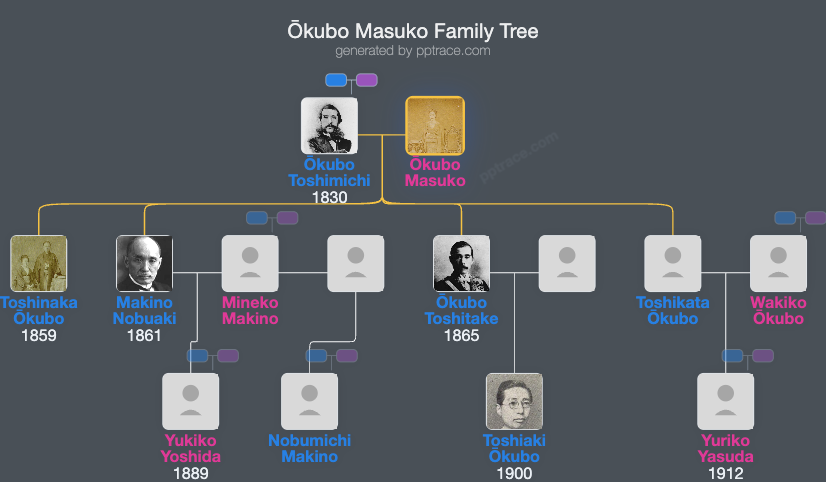
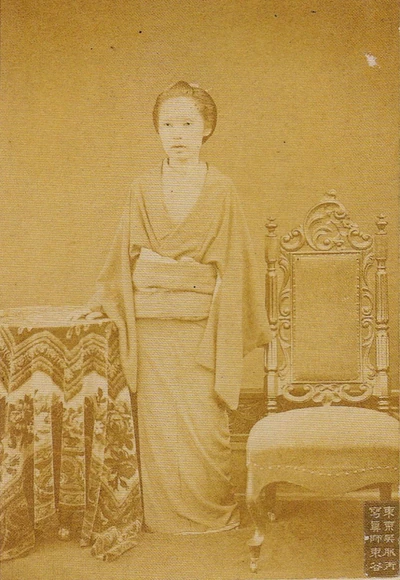
Masuko Okubo (born in the 11th year of Tenpō, 1840 – December 7, 1878) was a figure from the late Edo period to the early Meiji era, and was the wife of Toshimichi Okubo, one of the three great heroes of the Meiji Restoration. Regarding her name, it has been written as "Masu," "Masuko," or "Masuko," and in her personal letters, the character "舛" is used.
As for her lineage, she was the second daughter of Shirasaki Shichirōemon, a samurai of Satsuma Domain. Shirasaki Shichirōemon served for many years as a magistrate at the Osaka residence. Masuko had two brothers: Shirasaki Shichirō (a naval lieutenant) and Shirasaki Gengō (a naval rear admiral). Her children included Toshikazu, Nobutaka Makino, Toshitake, Ishihara Yūkuma, and Yoshiko (wife of Ikeda Hiko-kichi).
In her early life, at the end of 1857 (the 4th year of Ansei), Masuko married Toshimichi Okubo, who was 27 years old at the time. Toshimichi was serving as an aide to the domain lord. During this period, Masuko remained in Kagoshima to manage the household, supporting her husband as he traveled back and forth between Kyoto and Kagoshima. After the Meiji Restoration, she continued to live in Kagoshima; however, due to conflicts with Saigo Takamori and the resulting difficulties for the Okubo family, in 1874 (the 7th year of Meiji), she moved to Tokyo to live with Toshimichi.
Toshimichi was assassinated during the Kioisaka Incident in May 1878 (the 11th year of Meiji). Repeatedly ill, Masuko passed away about six months later. The "Meiji Tennō ki" states she died on December 6, and it is said that an imperial envoy was dispatched from the court for her funeral on the 9th. However, some other records indicate her date of death as the 17th. She was buried at Aoyama Cemetery alongside her husband.
Regarding their marriage, because Masuko died only four years after moving to Tokyo, there are few surviving records. Later, her only remaining letter was discovered at her great-grandson Toshiyasu’s home in Setagaya. This letter was a detailed report of her daily life in Satsuma while Toshimichi was busy plotting to overthrow the Tokugawa shogunate in Kyoto. Other surviving letters include one in which Toshimichi reassures his wife about his worries over their two sons studying in the United States, and a poem he composed while traveling in Europe and America, expressing his thoughts of her, indicating that Toshimichi was a devoted husband. It is also said that Toshimichi sometimes prepared gomoku sushi in the kitchen.
One of Masuko Okubo’s belongings that has been preserved is a small ring. Her life is remembered as that of a wife who continuously supported her husband amidst the tumult of the Meiji Restoration.
In television dramas, she has been portrayed by Chikako Kaku in "Flying as if" (1990 NHK TaigaDrama) and by Rie Mimura in "Sego Don" (2018 NHK TaigaDrama).
Among her reference materials are "The Grand Lineage of the Kaikaku Noble Families: Heisei New and Old Noble Lineages, Volume 1" (1996), Mitsuyo Iwao’s "Masuko Okubo—Supporting Husband Toshimichi and Protecting Her Origin Family" and "The Female of the Restoration" (1993), and Katsuta Mago’s "Toshimichi Okubo Biography," Volume 2 (1911).