
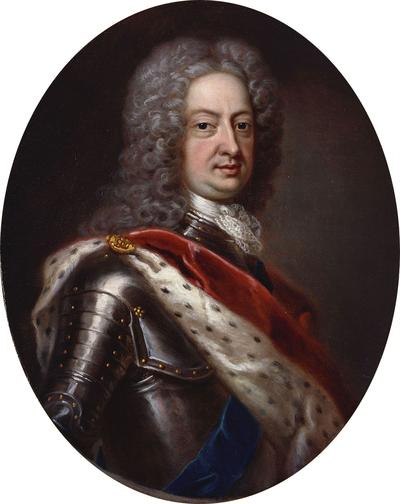
Ernest Augustus, Duke Of York And Albany
| Name | Ernest Augustus, Duke Of York And Albany |
| Title | Prince-Bishop of Osnabrück (1674-1728) |
| Gender | Male |
| Birthday | 1674-09-17 |
| nationality | Germany |
| Source | https://www.wikidata.org/wiki/Q655521 |
| pptrace | View Family Tree |
| LastUpdate | 2025-11-12T01:15:00.370Z |
Family Tree
Tap  to expand more relatives
Introduction
Ernest Augustus, Duke of York and Albany (17 September 1674 – 14 August 1728), was a member of the House of Hanover and the younger brother of George I of Great Britain. He was born in Hanover as the sixth son and seventh child of Ernest Augustus, Elector of Brunswick-Lüneburg, and Sophia of the Palatinate. His early childhood was spent in Osnabrück until his family moved to Hanover following his father’s accession to the ducal title.
His education involved travel to various European courts, a customary practice for German princes, aimed at establishing diplomatic contacts. In the summer of 1687, he visited the French court at Versailles via Amsterdam, where he and his brother gained popularity with the French royal family.
Ernest Augustus pursued a military career, aligning with the interests of Emperor Leopold I. He served as a soldier during the Nine Years’ War, participating in the Battle of Neerwinden in 1693, and during the War of the Spanish Succession, notably at the Siege of Lille in 1708. His military involvement was consistent with the practices of German princes of the time, often serving as officers in various European conflicts.
Following the death of his father, his elder brother George inherited the family lands and the electorate of Hanover. Due to the inheritance conditions requiring primogeniture, Ernest Augustus did not inherit these titles but maintained a positive relationship with George. He was actively engaged in the court at Herrenhausen in Hanover, where he facilitated diplomatic interactions and supported the cultural life of the court, including playing a role in securing the appointment of George Frideric Handel as Kapellmeister.
In 1714, his brother George ascended to the British throne, moving to London, while Ernest Augustus continued to serve as a senior family figure in Brunswick-Lüneburg. He was responsible for overseeing the upbringing of George’s grandson, Frederick Lewis, the future Prince of Wales, who was left in Germany to reassure neighboring states of the family's continued commitment to their German territories.
In 1715, following the death of Charles Joseph, Elector of Trier, Ernest Augustus was elected Prince-Bishop of Osnabrück as part of the Holy Roman Empire’s ceremonial rotation between Catholic and Protestant rulers, according to the Treaty of Westphalia. He divided his residence between Schloss Osnabrück and Herrenhausen. That same year, he was created Duke of York and Albany and Earl of Ulster by King George I of Great Britain. He was also appointed a Knight of the Garter on 30 April 1718.
Ernest Augustus retained his roles in both Osnabrück and Hanover until his death. He died at Osnabrück on 14 August 1728 and was buried there. His death followed that of his brother George I, who also died in Osnabrück a year earlier. Believed to have been homosexual, Ernest Augustus never married, and upon his death, his peerages associated with Britain and Ireland became extinct.
