
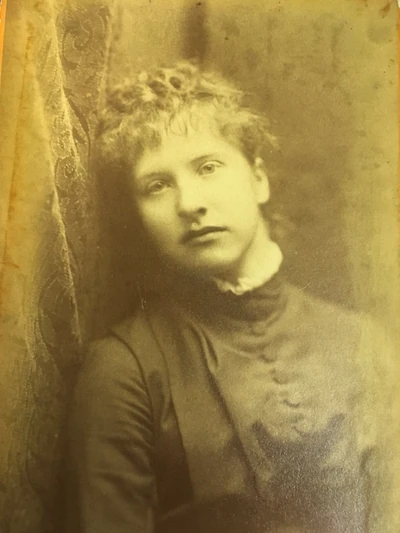
Elizabeth Balfour
| Name | Elizabeth Balfour |
| Title | social hostess and biographer |
| Gender | Female |
| Birthday | 1867-01-01 |
| nationality | — |
| Source | https://www.wikidata.org/wiki/Q18576115 |
| pptrace | View Family Tree |
| LastUpdate | 2025-11-26T23:31:11.698Z |
Family Tree
Tap  to expand more relatives
Introduction
Elizabeth Edith Balfour, Countess of Balfour (née Lady Elizabeth Bulwer-Lytton), was born on 12 June 1867 at Hyde Park Gate. She was the daughter of The Honourable Robert Bulwer-Lytton, a poet and diplomat, and Edith Villiers, a lady-in-waiting to Queen Victoria. She was one of seven children in her family.
Her paternal grandparents included Edward Bulwer-Lytton, 1st Baron Lytton, and Rosina Bulwer Lytton, Lady Lytton. She was a great-granddaughter of the women's rights advocate Anna Wheeler. On her mother's side, her lineage included George Villiers and Theresa Parker. She was also related to Henry Loch, 1st Baron Loch, through her maternal aunt.
During her childhood, her father held diplomatic posts in Lisbon, Madrid, and Vienna. The family received education from governesses. In 1876, her parents were appointed as Viceroy and Vicereine of India, residing in the Viceroy's Palace. Her father resigned from the position in 1880 and was created Earl of Lytton. Following this, the family returned to England, residing at Knebworth House in Hertfordshire. Her father later served as the British Ambassador to France. During this period, Lady Elizabeth often accompanied her father on diplomatic travels and took on societies hostess duties.
In 1887, Lady Elizabeth married Gerald Balfour of Whittingehame House, a Scottish aristocrat and Conservative Member of Parliament. Gerald Balfour was the brother of Arthur Balfour, future Prime Minister, and nephew of Robert Gascoyne-Cecil, 3rd Marquess of Salisbury. Her husband's siblings included Eustace Balfour, an architect who married Lady Frances Campbell, Lady Elizabeth's close friend involved in suffrage activities.
Elizabeth and Gerald Balfour had six children: Lady Eleanor Balfour (born 1890), Lady Ruth Balfour (died 1967), Lady Mary Edith Balfour (1900 – 1980), Lady Evelyn Barbara "Eve" Balfour (1898–1990), Robert Arthur Lytton Balfour, 3rd Earl of Balfour (1902–1968), and Lady Kathleen Constance Blanche Balfour (1912–1996). In 1900, the family moved to Woking, Surrey, commissioning architect Edwin Lutyens to design a country house named Fisher's Hill in Hook Heath. Gertrude Jekyll designed the gardens. The Balfours moved into Fisher's Hill in 1901 and hosted social and musical gatherings.
In her personal and political pursuits, Lady Balfour was actively involved in Conservative organizations, serving as Dame President of the Woking Habitation of the Primrose League. She was a founding member of the Conservative and Unionist Women's Franchise Association (CUWFA) in 1908 and served as its president in Edinburgh. She also held the position of vice president of the International Women's Franchise Club. A supporter of women's education, she encouraged her daughters to attend higher education institutions, with her eldest training as a doctor and another studying agriculture at Reading University.
Lady Balfour advocated for women's suffrage, especially after the 1910 failure of the Conciliation Bill. She traveled across Britain, delivering speeches in various locations including Kendal, Penzance, Gloucester, Ulster, Worcestershire, Lancashire, Cheshire, Shropshire, Staffordshire, and Gloucestershire. She challenged Conservative leaders publicly to support women’s voting rights, a task considered difficult within her political circles. She supported the Women's Social and Political Union (WSPU), chaired a 1911 meeting in Nairn where Emmeline Pankhurst spoke, but opposed the militant tactics of the WSPU. When a suffragette-led fire destroyed a medieval church in East Lothian, she helped with fundraising for its reconstruction.
In April 1919, Elizabeth Balfour became the first woman elected to the Woking Borough Council, representing St John's Ward. She also authored and edited various works, including a history of her father's administration in India titled *The History of Lord Lytton's Indian Administration, 1876 to 1880*, published before his death in 1891. She published a selection of her father's poetry in 1894 and edited *The Personal and Literary Letters of Robert, First Earl of Lytton* in 1906. Her 1910 publication analyzed a House of Commons debate on the Women's Franchise Bill, issued by CUWFA. In 1925, she edited *Letters of Constance Lytton*, written by her sister.
Lady Elizabeth Balfour died on 28 March 1942 due to a perforated duodenal ulcer at Fisher's Hill in Woking. A road in Westfield, named Balfour Road, is named after her.
