Mary Cassatt
| Name | Mary Cassatt |
| Title | American painter and printmaker (1844—1926) |
| Gender | Female |
| Birthday | 1844-05-22 |
| nationality | United States of America |
| Source | https://www.wikidata.org/wiki/Q173223 |
| pptrace | View Family Tree |
| LastUpdate | 2025-11-29T01:00:25.563Z |
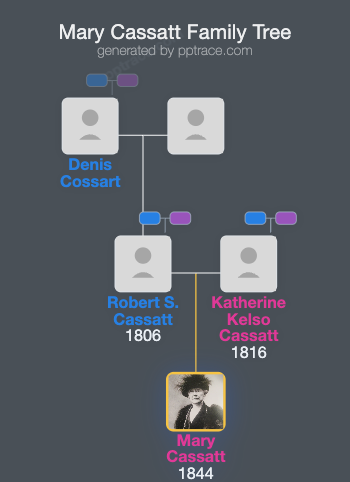
Family Tree
Tap  to expand more relatives
Introduction
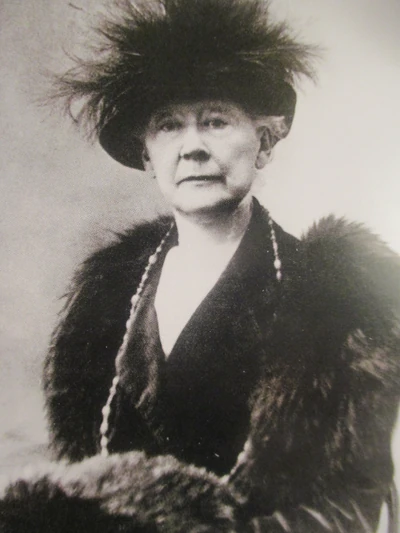
Mary Stevenson Cassatt (May 22, 1844 – June 14, 1926) was an American painter and printmaker. She was born in Allegheny, Pennsylvania, which is now part of Pittsburgh's North Side. Cassatt lived much of her adult life in France, where she befriended Edgar Degas and exhibited with the Impressionist movement. Her artwork often focused on the social and private lives of women, emphasizing the intimate relationships between mothers and children. Gustave Geffroy described her as one of "les trois grandes dames" of Impressionism, alongside Marie Bracquemond and Berthe Morisot. In 1879, Diego Martelli compared her to Degas, particularly in her pursuit of depicting movement, light, and design in a modern style. Cassatt played a significant role in introducing Impressionism to American collectors, notably through her relationship with the Havemeyer family.
Early life and family background
Cassatt was born into an upper-middle-class family. Her father, Robert Simpson Cassatt, was a successful stockbroker and land speculator. The family's ancestral name was Cossart, descending from French Huguenot Jacques Cossart, who arrived in New Amsterdam in 1662. Her mother, Katherine Kelso Johnston, came from a banking family and was well-educated and well-read, which had a lasting influence on Cassatt. Louisine Havemeyer, a lifelong friend, noted that Cassatt inherited her intellectual and artistic abilities from her mother. Cassatt was a distant cousin of artist Robert Henri and was one of seven children, two of whom died in infancy. Her brother, Alexander Johnston Cassatt, later became president of the Pennsylvania Railroad.
Cassatt's childhood involved extended periods in Europe, where she learned German and French, and was introduced to art and music. Her early exposure to French artists—including Jean Auguste Dominique Ingres, Eugène Delacroix, Camille Corot, and Gustave Courbet—likely occurred during the Paris World's Fair of 1855, which also featured Edgar Degas and Camille Pissarro. Despite her family's objection to her becoming a professional artist, Cassatt began her art studies at the Pennsylvania Academy of the Fine Arts in Philadelphia at age fifteen. Her education coincided with the American Civil War, and she studied alongside students such as Thomas Eakins. Frustrated with traditional academic training and limited access to live models for women, she decided to study independently.
Move to France and artistic training
In 1866, Cassatt moved to Paris with her mother and chaperones. Since women could not attend the École des Beaux-Arts, she studied privately with Jean-Léon Gérôme, known for his hyper-realistic style. Cassatt supplemented her education through daily copies from the Louvre, a practice necessary for her to gain access as a female artist. The Louvre also served as a social hub where American and French female students interacted, as women were barred from cafes where avant-garde artists socialized.
She studied with genre painter Charles Joshua Chaplin from 1866 and with Thomas Couture in 1868, focusing on romantic and urban subjects. In 1868, her painting A Mandoline Player was accepted into the Paris Salon, making her one of only two American women to exhibit there that year alongside Elizabeth Jane Gardner. During this period, the art scene was shifting towards modernism, with artists like Courbet and Manet challenging academic traditions.
Return to the United States and subsequent travels
In 1870, with the outbreak of the Franco-Prussian War, Cassatt returned to the United States, living with her family in Altoona, Pennsylvania. Her father continued to oppose her pursuit of an artistic career, providing financial support but not supplies. She exhibited some early works in New York but faced difficulties in selling her paintings. Cassatt considered abandoning her art career temporarily and expressed a desire to seek employment in the American West.
She traveled to Chicago in 1871 but lost some of her paintings in the Great Chicago Fire. Subsequently, she received a commission from Bishop Michael Domenec of Pittsburgh to copy paintings by Correggio in Parma, Italy. Encouraged by this opportunity, Cassatt, along with Emily Sartain, another artist from Philadelphia, returned to Europe.
Impressionism and further career development
Cassatt's fortunes improved shortly after her return to Europe in 1871. Her painting Two Women Throwing Flowers During Carnival was well received at the 1872 Salon and purchased by collectors. She gained support and recognition within the art community in Parma and traveled to Spain, producing works featuring Spanish subjects, including the painting Spanish Dancer Wearing a Lace Mantilla (1873).
In 1874, Cassatt established a studio in Paris with her sister Lydia. She engaged with contemporary critics as she continued to challenge traditional academic art and express her views on modern art practices. Throughout her career, Cassatt was known for her advocacy for women artists and her refusal to flout professional standards for favor or protection.