Nakamura Yūjirō
| Name | Nakamura Yūjirō |
| Title | Japanese military personnel |
| Gender | Male |
| Birthday | 1852-03-18 |
| nationality | Japan |
| Source | https://www.wikidata.org/wiki/Q1275089 |
| pptrace | View Family Tree |
| LastUpdate | 2025-11-17T06:48:19.318Z |
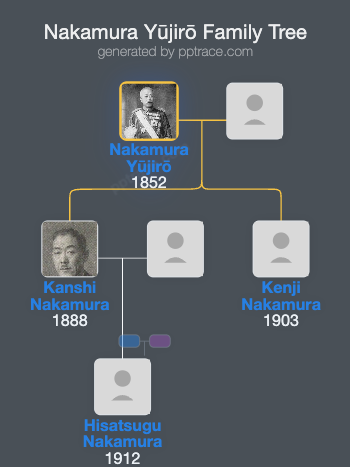
Family Tree
Tap  to expand more relatives
Introduction
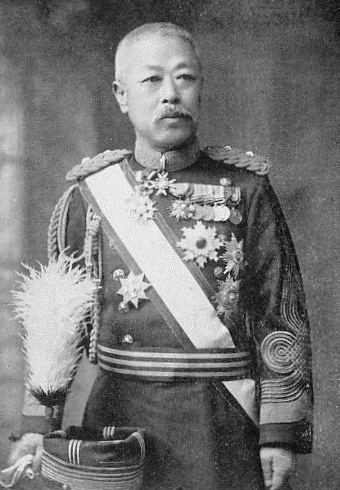
Yūjirō Nakamura was a Japanese army officer and politician, born on February 28, 1852, in Hase Village, Ishi District, Ise Province (present-day Tsu City, Mie Prefecture), during the Kaei era. His father was the head of a large estate, Nakamura Ikkan, but Nakamura experienced his family's decline in his childhood. He passed away on October 20, 1928.
Nakamura contributed to the development of the Imperial Japanese Army through his various important positions. He served as a professor at the Army War College, and held positions such as Chief of the First Section, First Bureau of the Army General Staff, and Commander of the Artillery's First Direction. He was also the principal of the Army Officer School, Vice Minister of the Army, and Director of Military Affairs Bureau, playing key roles in military administration and education.
His early education and military career began with studying in France in 1872. In February 1874, he became a Second Lieutenant in the Army and was assigned to the Osaka Garrison. Later, he served with the 7th Artillery Battalion and the Osaka Reserve Artillery's 2nd Battalion. In 1876, he was part of the Osaka Reserve Artillery's 2nd Battalion, and in 1877, he was posted to the Artillery Depot. In 1880, he supervised the Osaka Artillery Arsenal and, in April of the same year, became an instructor at the Army Officer School. From then on, he specialized in artillery, becoming a professor and instructor at the Army War College in 1882 and advancing to Major of Artillery in 1885.
Starting in 1886, he served as both a member of the Second Bureau of the General Staff and as a professor at the Army War College. In 1887, he worked as the Chief of the First Section, First Bureau of the Army General Staff, and he also traveled to Europe for diplomatic missions. In 1889, he was promoted to Lieutenant Colonel of Artillery, and thereafter was active as Chief of the Artillery's First Direction. After becoming a Colonel of Artillery in 1893, he held positions such as Head of the Army Military Affairs Bureau's Artillery Section and Chief of the First Military Section of the Military Affairs Bureau, and was promoted to Major General.
In 1897, as a Major General, he was appointed as the Head of the Army Officer School and concurrently became the Deputy Minister of the Army and Director of Military Affairs Bureau (until 1900). In 1900, he was appointed Minister of the Army's General Affairs. He retired from active service in 1902 and entered the reserve. Subsequently, he was involved in the steel industry as the Director of a steelworks.
Due to his achievements in military administration, he was ennobled as a Baron in 1907. He also held roles as a member of the Imperial family and government officials, being elected to the House of Peers in 1907. From 1907 to 1914, he served as President of the South Manchuria Railway, and was reappointed in 1914. Starting in 1915, he served as the Minister of the Imperial Household, managing royal duties.
In 1920, he was appointed as a Privy Councilor, serving in that capacity until his death in 1928. Details of his family are not known. His grave is located at Aoyama Cemetery in Minato, Tokyo.
Nakamura's honors include ranks such as Junior Seventh Rank (1875), Seventh Rank (1880), Junior Sixth Rank (1885), Sixth Rank (1891), Junior Fifth Rank (1893), Fifth Rank (1897), and Junior Fourth Rank (1900).