Kan'ichirō Ishibashi
| Name | Kan'ichirō Ishibashi |
| Title | Japanese businessman |
| Gender | Male |
| Birthday | 1920-03-01 |
| nationality | Japan |
| Source | https://www.wikidata.org/wiki/Q4476964 |
| pptrace | View Family Tree |
| LastUpdate | 2025-11-16T10:33:44.924Z |
Family Tree
Tap  to expand more relatives
Introduction
Kan'ichirō Ishibashi (March 1, 1920 – June 30, 1997) was a Japanese businessman. He was born in Kurume City, Fukuoka Prefecture. He served as president and chairman of Bridgestone.
Birth and Family Background
Kan'ichirō Ishibashi was the eldest son of Masujiro Ishibashi, the founder of Bridgestone Tire. His father, Masujiro, was a businessman who contributed to the development of Japan's tire industry. The family was raised in a wealthy household.
Education and Military Service
After graduating from Meizen Middle School (now Fukuoka Prefectural Meizen High School) and Fukuoka High School (the predecessor of Kyushu University College of Arts and Sciences), he spent a year as a ronin (preparatory student) before entering the Faculty of Law at Tokyo Imperial University (now the University of Tokyo) in 1937. He graduated from the university in 1943.
Subsequently, he volunteered for the Navy, entered the Naval Finance School to become a short-term active-duty officer in the accounting corps (abbreviated “Tankei”), and graduated in March 1944. He was assigned to the Tokyo Comptroller’s Office and was promoted to the rank of chief petty officer in accounting. At the end of the war, he was working at a branch office.
Postwar Activities and Corporate Management
After passing the higher examination in 1945, he joined Bridgestone Tire immediately after passing the exam. After working in factories for seven years, he became vice president in 1952. In 1963, he was promoted to president, and in 1973 he became chairman.
Leadership and International Expansion
In 1983, he led the acquisition of the American tire company Firestone, transforming Bridgestone into a global enterprise. He advocated for separating capital and management, implementing reforms to move away from family control. He resigned as chairman in 1985, relinquishing his executive authority.
Other Roles and Activities
From 1989 to 1991, he served as Vice Chairman of the Japan Business Federation (Keidanren). He was also the chairman of the Japan Society for Quality Control and, in 1995, donated his personal funds to establish an annex of the Ishibashi Museum of Art in Kurume City.
Legacy and Inheritance
At the time of his death, he owned 50 million shares of Bridgestone stock, as well as land, buildings, and artworks, with an estimated total value of approximately 164.6 billion yen. His estate was inherited by his three children, with an inheritance tax amounting to about 103.5 billion yen.
Executives and Relatives
As of April 30, 1951, he was listed among the officers of Fuji Seimitsu Kogyo. He also appeared alongside his father Masujiro at exhibits of Prince Sedans and the S6 series Prince Gloria prototypes, indicating close ties.
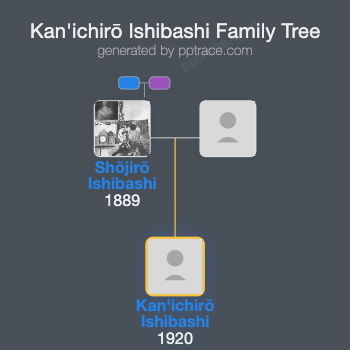
His relatives include his sister, Yasuko Hatoyama, and nephews Yukio Hatoyama and Kunio Hatoyama. His wife, Noriko, had a brother who was composer Ikuo Tan, and his father-in-law was I N O T a Tsurismo, a former president of Prince Motor. His grandfather was Taku Mura, chairman of Mitsui Gomei, and bureaucrat Kizo Ueno was also a relative.
Honors and Recognition
He received the Blue Ribbon Medal in 1981. In 1986, he was awarded the Commander of the Order of the Crown of Belgium. In 1989, he received the Ordre des Arts et des Lettres Officier (Officer) of France.
Additionally, in 1989, Kurume City awarded him the title of Honorary Citizen.
Death
He died at the age of 77 on June 30, 1997. His grave is located in section 9, lot 2, of Tama Cemetery.