Arthur Asquith
| Name | Arthur Asquith |
| Title | British First World War general |
| Gender | Male |
| Birthday | 1883-04-24 |
| nationality | — |
| Source | https://www.wikidata.org/wiki/Q4797853 |
| pptrace | View Family Tree |
| LastUpdate | 2025-11-26T23:31:21.613Z |
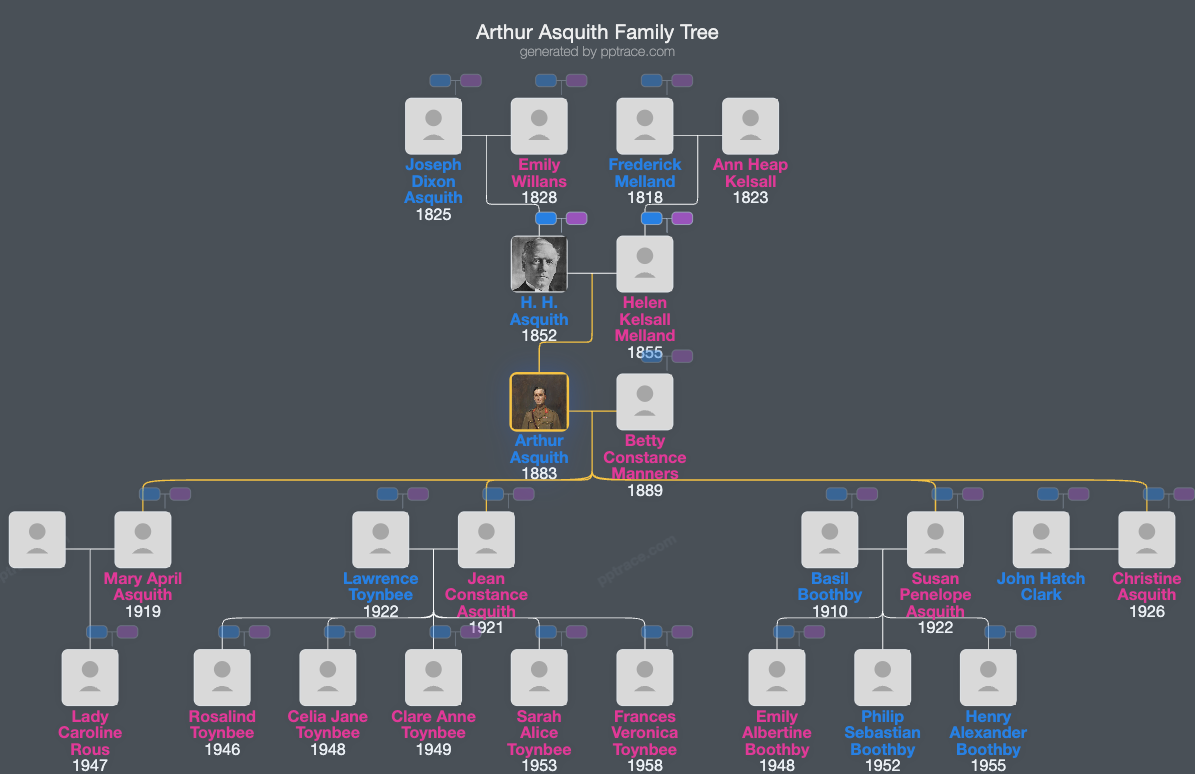
Family Tree
Tap  to expand more relatives
Introduction
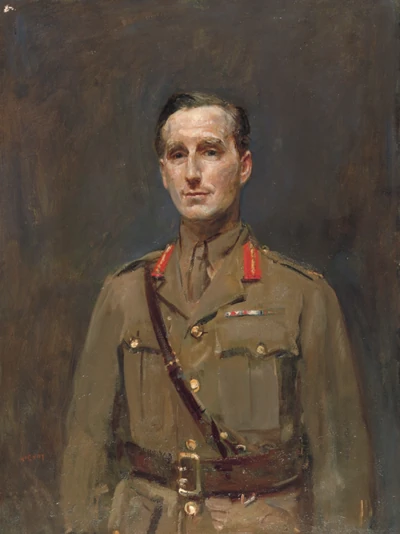
Arthur Melland Asquith was born on 24 April 1883. He was the third son of H. H. Asquith, who served as the British Prime Minister during the initial three years of the First World War, and his wife Helen Melland. Helen Melland died in 1891 when Arthur was seven years old. Arthur Asquith received his education at Winchester College, and later attended New College, Oxford. After completing his university studies, he was employed by Franklin & Herrera, a trading firm engaged in extensive business activities in Argentina.
In 1914, at the outbreak of the First World War, Asquith resigned from Franklin & Herrera and joined the Royal Navy. He was granted a temporary commission in the Royal Naval Volunteer Reserve with the rank of sub-lieutenant in October 1914. His elder brothers also enlisted during the war; Raymond Asquith was commissioned into the London Regiment and was killed in action in 1916, while Herbert Asquith joined the Royal Artillery.
The Royal Naval Division was formed as a separate land-based unit within the Royal Navy to supplement naval forces on land during the war. Asquith was among the first to join this division, which was rapidly deployed to Belgium during the early months of the conflict. The division suffered heavy casualties during the Siege of Antwerp and was evacuated before the city fell. In 1915, the division was redeployed to the Gallipoli campaign in the Mediterranean. During this campaign, Asquith was awarded the Distinguished Service Order (DSO) for his actions and was wounded, leading to his evacuation and subsequent transfer to staff duties.
Following Gallipoli, the Royal Naval Division, now designated as the 63rd Division, was transferred to the Western Front in 1916. Asquith served as a staff officer until April 1917, when he assumed command of the 189th Brigade in replacement of Bernard Freyberg due to heavy casualties. As commander of the brigade, he participated in intense combat operations throughout 1917 and was wounded multiple times, earning two additional Bars to his DSO. He was promoted to temporary brigadier-general on 16 December 1917, and shortly thereafter, on 17 December 1917, he was severely wounded and evacuated to Britain.
In January 1918, Asquith underwent surgery that resulted in the amputation of his leg, leading to his retirement from active military service with the rank of brigadier general. During the remainder of the war, he served with the Ministry of Munitions, specifically within the Controller of the Trench Warfare Department. After demobilization, he resided at Clovelly Court in Devon.
Arthur Asquith was married on 30 April 1918 to Betty Constance Manners, sister of Francis Manners, 4th Baron Manners. Betty Manners served as his aide-de-camp during the war. The couple had four daughters. Their daughter Jean Constance, born in 1920, studied medicine at Somerville College, Oxford, and married the painter Lawrence Toynbee, son of Arnold J. Toynbee and Rosalind Murray.
Following the war, Asquith participated in commemorative activities, including chairing the committee responsible for establishing the Royal Naval Division War Memorial outside the Admiralty building in London. By 1935, he was noted as chairman of Brazil Plantations Syndicate Ltd, chairman of Parana Plantations Ltd, and a director of San Paulo (Brazilian) Railway Co Ltd. Arthur Melland Asquith died on 25 August 1939. A memorial for him is located in the North Aisle of All Saint’s Church in Clovelly, Devon; his wife Betty had inherited the Clovelly Estate from her aunt, Christine Hamlyn, in 1936.