
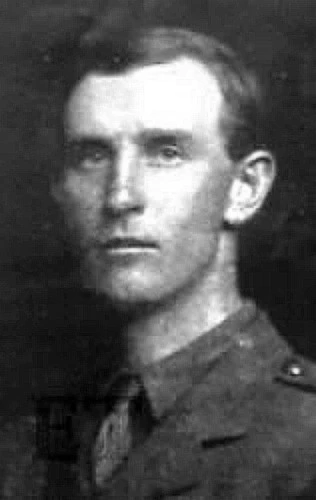
Raymond Asquith
| Name | Raymond Asquith |
| Title | English barrister (1878-1916) |
| Gender | Male |
| Birthday | 1878-11-06 |
| nationality | United Kingdom of Great Britain and Ireland |
| Source | https://www.wikidata.org/wiki/Q2134060 |
| pptrace | View Family Tree |
| LastUpdate | 2025-11-26T23:31:23.332Z |
Family Tree
Tap  to expand more relatives
Introduction
Raymond Herbert Asquith was born on November 6, 1878, in England. He was the eldest son of Herbert Henry Asquith, who served as the Prime Minister of the United Kingdom, and his first wife, Helen Kelsall Melland. He was educated at Winchester College and later attended Balliol College, Oxford, where he secured a scholarship in 1896. During his time at Oxford, Asquith achieved notable academic success, earning the Ireland, Derby, and Craven scholarships and graduating with first-class honors. In 1902, he was elected a fellow of All Souls College, Oxford, and was awarded the Eldon Law Scholarship.
He was called to the bar in 1904, establishing a legal career. Asquith was known as a tall and handsome individual and was associated with the Coterie, a social and intellectual group of Edwardian youth that included Lady Diana Manners, Patrick Shaw-Stewart, Charles Lister, Hugo Charteris, Julian Grenfell, and Edward Horner. The group was known for its unconventional lifestyle and lavish social gatherings.
In terms of his professional legal engagements, Asquith served as junior counsel in the North Atlantic Fisheries Arbitration and the inquiry into the sinking of RMS Titanic. He was considered a potential Liberal parliamentary candidate for Derby, but his political trajectory was interrupted by the outbreak of the First World War.
Asquith was commissioned into the British Army on December 17, 1914, as a second lieutenant in the 16th (County of London) Battalion of the London Regiment (Queen's Westminster Rifles). On August 14, 1915, he transferred to the 3rd Battalion of the Grenadier Guards and served as a staff officer. He later requested to return to active duty with his battalion before the Battle of the Somme.
During the Battle of Flers-Courcelette near Ginchy on September 15, 1916, Asquith led a charge with his company. He was shot in the chest during the attack but continued to encourage his men by lighting a cigarette despite his injuries. He died at approximately 4:30 pm while being carried back to British lines. His body was interred at Guillemont in the CWGC Guillemont Road Cemetery, with a headstone inscribed with a line from Shakespeare’s Henry V: "Small time but in that small most greatly lived this star of England."
His death occurred during his father’s tenure as Prime Minister and was noted by Winston Churchill in an obituary, describing Asquith's calm and resolute demeanor in the face of death. The writer John Buchan also documented his character, noting his admired yet distant personality, marked by a lack of warmth and perceived as somewhat arrogant or aloof, but also as deeply loyal and considerate toward friends.
A memorial tablet dedicated to Asquith is located in Amiens Cathedral, featuring inscriptions in French and Latin, and includes a prayer. Additional memorials designed by Sir Edwin Lutyens are located in St. Andrew's Church in Mells, Somerset, and on the Mells War Memorial. The inscription in St. Andrew’s Church honors his virtuous qualities and his bravery in dying for his country, mentioning his education and his early death in the midst of his potential.
In 1907, Raymond Asquith married Katharine Frances Horner, daughter of Sir John Francis Fortescue Horner of Mells, Somerset. Katharine's family had ancestral ties to the Tudor figure Thomas Horner. Her mother, Lady Horner, was noted for her patronage of the arts. Raymond and Katharine had three children: Lady Helen Frances Asquith, Perdita Rose Mary Jolliffe, and Julian Edward George Asquith, the 2nd Earl of Oxford and Asquith.
Julian was born shortly before Asquith's death and was nicknamed "Trim," reportedly in honor of the Roman figure Trimalchio, after the father saw his newborn son for the first time during a leave from service. Raymond Asquith died on September 15, 1916, during World War I, in France. His wife later converted to Roman Catholicism and maintained connections with notable figures such as Siegfried Sassoon and Evelyn Waugh.
