Herbert Asquith
| Name | Herbert Asquith |
| Title | English poet, novelist, and lawyer (1881–1947) |
| Gender | Male |
| Birthday | 1881-03-11 |
| nationality | United Kingdom |
| Source | https://www.wikidata.org/wiki/Q15516791 |
| pptrace | View Family Tree |
| LastUpdate | 2025-11-26T23:31:26.105Z |
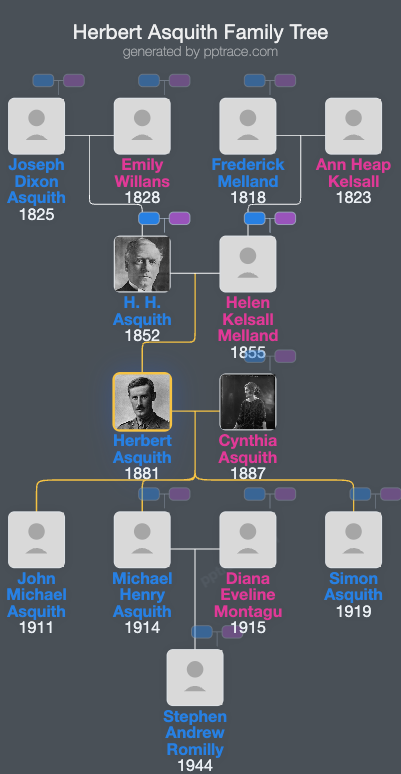
Family Tree
Tap  to expand more relatives
Introduction
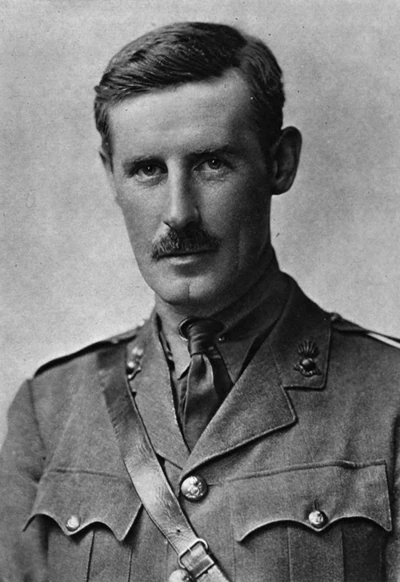
Herbert Dixon Asquith was born on 11 March 1881 and died on 5 August 1947. He was an English writer and lawyer, known for his contributions as a poet and novelist. Asquith was the second son of H. H. Asquith, who served as the Prime Minister of the United Kingdom, and he had a brother named Raymond Asquith.
Herbert Asquith was given the nickname "Beb" by his family. His educational background includes studies that prepared him for his later careers in law and literature. During World War I, he served with the Royal Artillery, an experience that influenced his literary work.
Asquith’s poetry includes titles such as "The Volunteer" and "The Fallen Subaltern." The latter serves as a tribute to soldiers who lost their lives during the war. His poem "Soldiers at Peace" was set to music by Ina Boyle, an Irish composer.
In addition to poetry, Herbert Asquith wrote several novels. His notable works include "Young Orland," which is set during and after the First World War, as well as "Wind's End," "Mary Dallon," and "Roon."
In 1910, Herbert Asquith married Lady Cynthia Charteris, who was also a writer. Lady Cynthia was the eldest daughter of Hugo Charteris, the 11th Earl of Wemyss, and his wife, Mary Constance Wyndham. The couple had three sons together.
In his later years, Herbert Asquith published "Moments Of Memory" in 1938, a collection of recollections and impressions.
External links related to Herbert Asquith include works available at Wikisource and a profile page. Further biographical details are available through various references, though specific citations are not included here.