Takahito, Prince Mikasa
| Name | Takahito, Prince Mikasa |
| Title | Japanese prince |
| Gender | Male |
| Birthday | 1915-12-02 |
| nationality | Japan |
| Source | https://www.wikidata.org/wiki/Q280229 |
| pptrace | View Family Tree |
| LastUpdate | 2025-11-17T06:47:07.460Z |
Family Tree
Tap  to expand more relatives
Introduction
Takahito, Prince Mikasa (三笠宮崇仁親王, Mikasa-no-miya Takahito Shinnō), was born on 2 December 1915 at the Tokyo Imperial Palace. He was the youngest of four sons of Emperor Taishō (Yoshihito) and Empress Teimei (Sadako). His oldest brother was Emperor Shōwa (Hirohito). He was also known by the childhood name Sumi-no-miya.
Prince Mikasa received his early education at the Gakushūin (Peers' School), attending from 1922 to 1932 in both elementary and secondary levels. In 1932, he enrolled in the Imperial Japanese Army Academy and graduated in 1936, subsequently being commissioned as a sub-lieutenant and assigned to the Fifth Cavalry Regiment. He further graduated from the Army Staff College. Upon reaching the age of majority in December 1935, he was granted the title Mikasa-no-miya by Emperor Shōwa and authorized to establish a new branch of the imperial family.
During his military career, Prince Mikasa served in China, joining the Fifth Cavalry Regiment in 1936. He was promoted to lieutenant in 1937 and to captain in 1939. His service in China was marked by criticism of the Japanese military’s conduct there, and he expressed strong disapproval of atrocities committed by Japanese troops. In a 1994 interview, he recounted being "strongly shocked" by the use of living Chinese prisoners for bayonet practice to train new soldiers. He is known to have viewed Japanese actions in China critically, having written a detailed indictment of military atrocities, which was suppressed but later surfaced in 1994.
Prince Mikasa was promoted to major in 1941 and served as a staff officer in Nanjing from January 1943 to January 1944. His role involved supporting efforts related to the Wang Jingwei regime and coordinating with the Japanese Army, but these efforts were undermined by the Operation Ichi-Go campaign. He continued serving as a staff officer in Tokyo until Japan’s surrender in August 1945.
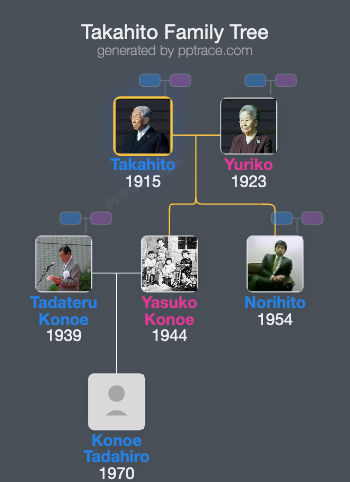
He married Yuriko Takagi on 22 October 1941; she was the second daughter of Viscount Masanari Takagi. Their marriage occurred shortly before the attack on Pearl Harbor. Takahito and Yuriko had five children: two daughters who surrendered their imperial titles upon marriage and three sons who predeceased them. The children’s names include Princess Yasuko, Prince Tomohito, Prince Katsura, Princess Masako, and Prince Norihito. Their descendants include nine grandchildren and seven great-grandchildren, with some grandchildren remaining in the imperial family.
Following World War II, Prince Mikasa was active in public life and political discourse. He publicly urged Emperor Hirohito to abdicate in 1946, to accept responsibility for Japan’s defeat, but the U.S. military authorities insisted the Emperor remain on the throne.
In the post-war period, he pursued academic interests, enrolling at the University of Tokyo’s Faculty of Literature. He specialized in archaeology, Middle Eastern studies, and Semitic languages. From 1954 until his death, he directed the Japanese Society for Middle East Studies.
He was the last surviving child of Emperor Taishō and Empress Teimei. After the death of his sister-in-law, Princess Takamatsu, in 2004, Prince Mikasa became the oldest living member of the Imperial House of Japan. He remained active through his later years and died at the age of 100 on 27 October 2016. At the time of his death, he was recognized as the oldest living royal.