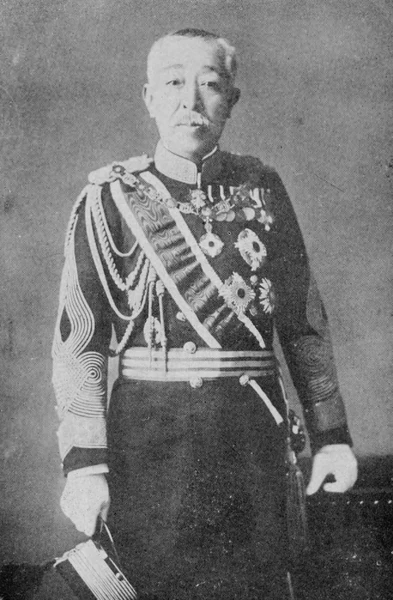
Prince Fushimi Sadanaru
| Name | Prince Fushimi Sadanaru |
| Title | Japanese prince |
| Gender | Male |
| Birthday | 1858-06-09 |
| nationality | Japan |
| Source | https://www.wikidata.org/wiki/Q466326 |
| pptrace | View Family Tree |
| LastUpdate | 2025-11-29T01:01:39.144Z |
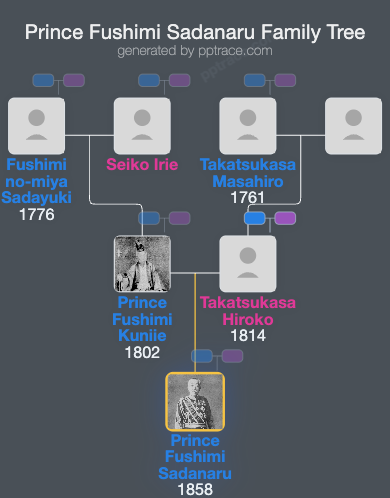
Family Tree
Tap  to expand more relatives
Introduction
Fushimi-no-miya Sadanaru (伏見宮貞愛親王, Fushimi-no-miya Sadanaru-Shinnō) was born on June 9, 1858, in Kyoto, Japan. He was the fourteenth son of Prince Fushimi Kuniie (1802–1875) and his mother was Princess Takatsukasa Hiroko, making him a member of the Imperial Family. He was the second son of Princess Takatsukasa Hiroko. His familial relationships included being the half-brother of Prince Yamashina Akira, Prince Kuni Asahiko, Prince Kitashirakawa Yoshihisa, and Prince Kan'in Kotohito.
In 1875, he succeeded his father as the head of the Fushimi-no-miya family, a branch of the Imperial Family’s shinnōke (princely house). In 1872, he married Princess Arisugawa Toshiko (1858–1927), the daughter of Prince Arisugawa Takahito. They had two sons: Prince Kunika (1880–1933) and Prince Akinori (1881–1883). Additionally, he had two children born from concubines: Prince Hiroyasu (October 16, 1875 – August 16, 1946) and Princess Sachiko (1885–1966). Prince Kunika was expected to succeed his father as the head of the Fushimi-no-miya but due to illness, he did not inherit the position, which was passed to his elder half-brother, Prince Hiroyasu.
Prince Fushimi Sadanaru pursued a military career, entering the military academy in 1873. He participated as a lieutenant in the Satsuma Rebellion and was promoted to captain in 1878. He studied military tactics abroad at the École Spéciale Militaire de Saint-Cyr in France and later in Germany during the 1870s. Upon his return to Japan, he was promoted to major in 1881, where he advocated for establishing a Japanese General Staff modeled after the Prussian military structure. His subsequent promotions included lieutenant colonel in 1884, colonel in 1887, and major general in 1889.
He was awarded the Grand Cordon of the Order of the Chrysanthemum in 1886. During the First Sino-Japanese War (1894–1895), he served as a field commander, leading the IJA 4th Division in the Liaodong Peninsula, China. He also participated in Japan's invasion of Taiwan in 1895. On May 26, 1896, he represented Emperor Meiji at the coronation of Tsar Nicholas II of Russia.
In 1898, he was promoted to lieutenant general and commanded the IJA 10th Division based in Himeji. By 1901, he was appointed commander of the IJA 1st Division. During the Russo-Japanese War (1904–1905), he again landed forces on the Liaodong Peninsula, and in June 1904, he was promoted to full general. He was recalled to Japan to serve on the Supreme War Council and participated in diplomatic missions to the United States and the United Kingdom, including efforts to thank Britain for assistance during the war and a visit to Honolulu to meet with the Japanese community.
In 1909, he was sent on a diplomatic mission to China. He attended the state funeral of King Edward VII of Great Britain on May 20, 1910, and met King George V at Buckingham Palace. As a close advisor to Crown Prince Yoshihito (later Emperor Taishō), he continued to exert influence in court affairs. After Emperor Meiji’s death in 1912, he served as the Lord Keeper of the Privy Seal of Japan from 1912 to 1915, becoming the only imperial prince to hold that position.
In 1915, he was promoted to field marshal, a largely ceremonial rank, and was awarded the Grand Collar of the Supreme Order of the Chrysanthemum in 1916. He died of influenza on February 4, 1923, at his vacation home in Cape Inubō and was given a state funeral. His wife, Dowager Princess Fushimi Toshiko, died on January 3, 1930. His successor as head of the Fushimi-no-miya was his son, Fleet Admiral Prince Fushimi Hiroyasu.
His decorations included the Collar and Grand Cordon of the Supreme Order of the Chrysanthemum, Grand Cordon of the Order of the Rising Sun with Paulownia Flowers, Grand Cordon of the Order of the Sacred Treasure, and the Order of the Golden Kite (2nd Class), among others from various foreign countries.