Jing Hengyi
| Name | Jing Hengyi |
| Title | Chinese educator and revolutionary |
| Gender | - |
| Birthday | 1877-01-01 |
| nationality | — |
| Source | https://www.wikidata.org/wiki/Q15940887 |
| pptrace | View Family Tree |
| LastUpdate | 2025-02-28T08:50:35.605Z |
Family Tree
Tap  to expand more relatives
Introduction
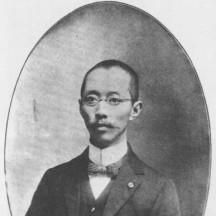
Jing Hengyi, courtesy name Ziyuan, was born in 1877 in Shangyu, Zhejiang. His father was Jing Yuanshan, who served as the director of the Shanghai Telegraph Office and had connections with Kang Youwei. In his youth, Jing Hengyi participated in the movement to oppose Empress Dowager Cixi's removal of Emperor Guangxu, and he was wanted by authorities, leading him to seek refuge in Macau. In 1903, he went to Tokyo, Japan, to study, majoring in pedagogy, and graduated in 1910 upon returning to China.
After returning, Jing Hengyi served as the Director of Academic Affairs at the Zhejiang Two-Level Normal School, later becoming the principal of Zhejiang First Normal School. During his tenure as principal, he proposed the educational philosophy of “character education,” emphasizing the comprehensive development of morality, intelligence, physical health, and aesthetics, and promoting democratic, free, self-disciplined, and autonomous teaching principles. In 1920, he founded Chunhui Middle School in Shangyu, serving as its first principal, advocating for character cultivation as the core, and opposing the educational restrictions imposed by old powers. In 1923, he also served as principal of Zhejiang Provincial Fourth Middle School, but resigned two years later and was replaced by an acting principal.
Jing Hengyi was an advocate of “keeping pace with the times” in education, promoting the introduction of modern educational ideas, supporting the vernacular movement, and emphasizing interdisciplinary learning and holistic development. He actively promoted student self-governance, balancing ideological enlightenment with character development, and encouraging critical thinking and free expression. In 1925, he became the chairman of the National Education Committee, and during the Northern Expedition period, he served as acting president of Sun Yat-sen University in Guangzhou. He also held positions as the Director of Education at Beijing Higher Normal School and chairman of the Zhejiang Education Association.
As an artist, Jing Hengyi loved seal carving. From a young age, he studied Chinese seals, blending various styles through history. His seal works are gentle and elegant, often utilizing border and connecting edge techniques, and inspired by ancient seals like the “Cuan Baozi Stele” in layout and structure, emphasizing structural variation and expressing content with his unique seal style. His notable works include “Ink Bamboo,” “Pine, Bamboo, Banana Tree, and Cock’s Comb,” among others, paying special attention to the artistic expression of edge and colophon, adopting styles from ancient inscriptions.
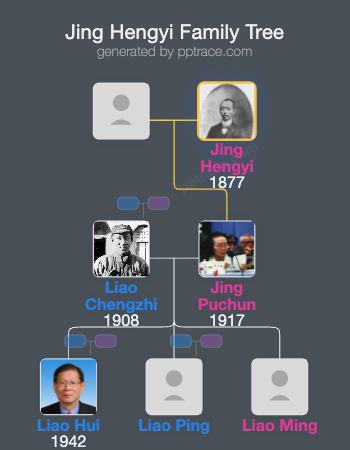
Among his family members, his daughter was Jing Puchun, his son-in-law was Liao Chengzhi, and his grandson was Liao Hui. His family connections had influence in political and cultural circles.
Jing Hengyi passed away in Shanghai on September 15, 1938, at the age of 62. Throughout his life, he demonstrated passionate commitment to educational reform and persisted in his ideals, leaving a profound impact. He is regarded as one of the important pioneers of modern Chinese education. His educational ideas and practices have stood the test of time and occupy an important position in the development of modern quality education in China.