Iwao Matsukata
| Name | Iwao Matsukata |
| Title | (1862-1942) |
| Gender | Male |
| Birthday | 1862-05-04 |
| nationality | Japan |
| Source | https://www.wikidata.org/wiki/Q40033369 |
| pptrace | View Family Tree |
| LastUpdate | 2025-11-17T10:07:37.036Z |
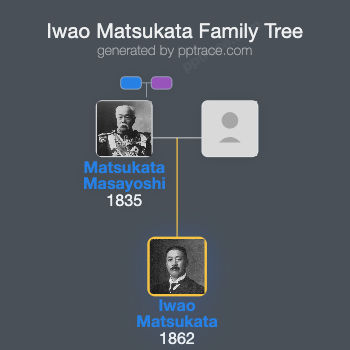
Family Tree
Tap  to expand more relatives
Introduction
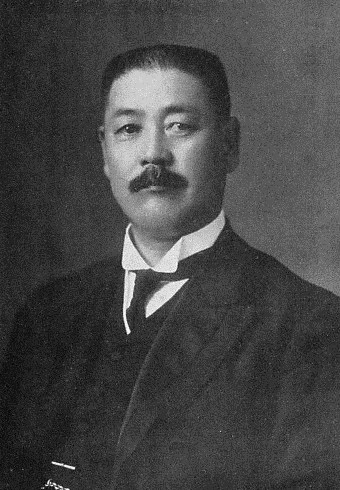
Iwao Matsukata (松方巌, in traditional characters: 松󠄁方 巖), born April 6, 1862 (Bunkyu 2, 4th month 6th day) – August 9, 1942 (Showa 17), was a Japanese industrialist, politician, and member of the aristocracy. He served as a duke member of the House of Peers and was the president of Jugo Bank.
He was born in Kagoshima Castle Town, Satsuma Province. At the time of his birth, the era was Bunkyu 2, and his birthdate corresponds to May 4, 1862, in the Gregorian calendar. His father was Satsuma samurai Masayoshi Matsukata, and he was raised as the eldest son. His family included his mother, Mitsako (the eldest daughter of Satsuma retainer Kawaue Sadao), as well as brothers: the industrialist Kojiro Matsukata and the youngest brother, mountaineer and businessman Saburo Matsukata.
In 1883 (Meiji 16), he studied abroad at universities including Leipzig University in Germany. He returned to Japan in 1886 (Meiji 19) and initially took a position as a consular officer candidate, but later shifted to the business world. His notable career positions included vice-president and president of Jugo Bank, vice chairman of the Tokyo Bank Assembly, special member of the Tokyo Commercial Association, president of Taisho Bank, director of Yokohama Specie Bank, and director of Teikoku Warehouse Transportation.
On September 1, 1924 (Taisho 13), he was granted the title of duke, following the death of his father. This change entitled him to serve as a duke member of the House of Peers.
Later, in 1927 (Showa 2), facing the practical insolvency of Jugo Bank due to the Showa Financial Panic, he volunteered to contribute his own assets for asset formation. He donated approximately 4.9 million yen, including his private estate in Mita, a farm in Nasu, a summer villa in Atami, and numerous antiques. As a result, on November 29 of that year, he submitted a petition for the renunciation of his noble title to the Imperial Household Ministry, and on December 6, he resigned from his position as a duke member of the House of Peers, renounced his aristocratic title, and retired from public office.
He died in 1942 (Showa 17). His family estate was inherited by his eldest son and adopted heir, Saburo Matsukata. His gravesite is located at Aoyama Reien Cemetery.
Honors received include the Senior Fifth Rank (October 3, 1884), the Senior Fourth Rank (June 16, 1891), and the Senior Third Rank (June 20, 1898). His noble rank was elevated upon the accession to duke in 1924.
His family included his wife Yasuko Matsukata, his eldest daughter Takeko (married to Kuroki Sanji), and his adopted son Katsuhiro Matsukata (1904–1936), who was the fourth son of Kojiro Matsukata, as well as his youngest brother, mountaineer and businessman Saburo Matsukata.
All these details are compiled from multiple sources.