
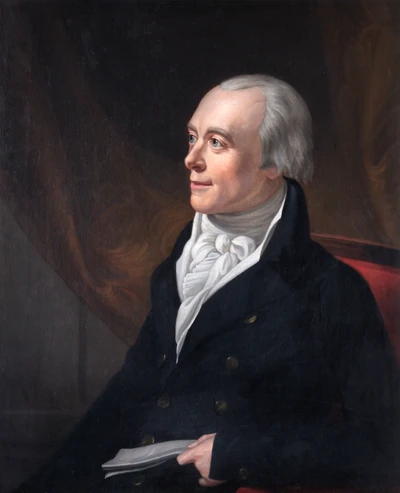
Spencer Perceval
| Name | Spencer Perceval |
| Title | 19th-century prime minister of the United Kingdom (1762–1812) |
| Gender | Male |
| Birthday | 1762-11-01 |
| nationality | United Kingdom of Great Britain and Ireland |
| Source | https://www.wikidata.org/wiki/Q233992 |
| pptrace | View Family Tree |
| LastUpdate | 2025-11-26T23:26:01.466Z |
Family Tree
Tap  to expand more relatives
Introduction
Spencer Perceval (1 November 1762 – 11 May 1812) was a British politician and barrister who served as Prime Minister of the United Kingdom from October 1809 until his assassination in May 1812. He is notable for being the only British prime minister to have been assassinated and the only solicitor-general or attorney-general to have attained this office.
Perceval was born in Audley Square, Mayfair, London, as the seventh son of the 2nd Earl of Egmont, an Anglo-Irish peer. His mother was Catherine Compton, Baroness Arden, granddaughter of the 4th Earl of Northampton. His paternal lineage included connections to Spencer Compton, 1st Earl of Wilmington, a former Prime Minister. His early childhood was spent at Charlton House in London. Perceval's father died when he was eight years old.
He received education at Harrow School, where he developed an interest in evangelical Anglicanism and established a lifelong friendship with Dudley Ryder. After completing his studies at Harrow, Perceval attended Trinity College, Cambridge, where he graduated in 1782 after winning the declamation prize in English.
Perceval chose a career in law due to limited financial prospects as the second son of a second marriage. He studied at Lincoln's Inn and was called to the bar in 1786. His early career included prosecuting notable sedition cases, such as those against Thomas Paine in 1792 and John Horne Tooke in 1794. He served in the London and Westminster Light Horse Volunteers from 1794 to 1803.
In his personal life, Perceval married Jane Wilson, whom he eloped with in 1790 after her father initially opposed the match due to Perceval's modest income. They settled in lodgings over a carpet shop in Bedford Row and later at Lindsey House, Lincoln's Inn Fields.
Perceval's political career began in 1796 when he succeeded his cousin as the Member of Parliament for Northampton, a position he held until his death in 1812. He was descended from a family with notable political connections and was aligned with William Pitt the Younger, although he did not formally identify as a Tory. His early parliamentary speeches focused on opposition to reform and support for the government’s policies against France.
Perceval was appointed Solicitor General in 1801 and Attorney General in 1802 during the ministry of Henry Addington. He continued in this role when Pitt formed a second ministry in 1804. His legal work included prosecuting radicals and dealing with trade union issues.
In 1809, Perceval became Prime Minister, leading a government faced with several crises, including the mental health issues of King George III, economic depression, and social unrest. His government supported the ongoing Peninsular War against Napoleon and navigated challenges such as the Walcheren expedition inquiry and Luddite protests. His political position strengthened by early 1812, but he was assassinated in the lobby of the House of Commons by John Bellingham, a merchant with grievances against the government. Bellingham was executed a week later.
Perceval's family included four older brothers who survived to adulthood. The earldom of Egmont, linked to his family, was passed through male heirs into the early 20th century and became extinct in 2011.
