
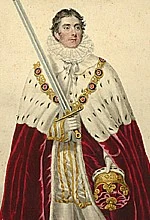
Henry Pelham-Clinton, 4th Duke Of Newcastle
| Name | Henry Pelham-Clinton, 4th Duke Of Newcastle |
| Title | British nobleman and politician (1785-1851) |
| Gender | Male |
| Birthday | 1785-01-31 |
| nationality | United Kingdom of Great Britain and Ireland |
| Source | https://www.wikidata.org/wiki/Q2034202 |
| pptrace | View Family Tree |
| LastUpdate | 2025-11-26T23:21:21.409Z |
Family Tree
Tap  to expand more relatives
Introduction
Henry Pelham Fiennes Pelham-Clinton, 4th Duke of Newcastle-under-Lyne, was born on 31 January 1785 and died on 12 January 1851. He was a British nobleman and politician active in the late 1820s and early 1830s. His early titles included Lord Clinton from birth until 1794 and Earl of Lincoln from 1794 to 1795.
Early Life:
Pelham-Clinton was the eldest son of Thomas Pelham-Clinton, 3rd Duke of Newcastle, and Lady Anna Maria (née Stanhope). He was educated at Eton College. His father died when he was ten years old. In 1803, amidst the Peace of Amiens, his mother and stepfather took him on a European Tour. However, due to the resumption of hostilities with France, he was detained at Tours in 1803 and remained there until 1806.
Career:
Upon returning to England in 1807, Pelham-Clinton married Georgiana Elizabeth, daughter of Edward Miller Mundy of Shipley, Derbyshire, on 18 July 1807. She was identified as a great heiress. He served as Lord Lieutenant of Nottinghamshire from 1809 to 1839 and held other positions including Steward of Sherwood Forest and of Folewood Park. In 1812, he was appointed a Knight of the Garter.
Opposition to Catholic Emancipation:
On 22 March 1821, Newcastle published a pamphlet addressed to Lord Liverpool advocating against a Bill for Catholic Emancipation. He argued that supporting Emancipation would be unjust to the country, citing the government's preoccupation with domestic issues and the constitutional implications concerning the King's promise to uphold the Protestant constitution. He maintained a staunch opposition to Catholic Emancipation, aligning with the "Ultra-Tory" faction from around 1826, which supported the established church, traditional institutions, and the monarchy.
In March 1827, Newcastle expressed to Lord Colchester his intention to support the formation of a government opposed to Emancipation, and he communicated with King George IV about his political stance. He believed that an administration supporting Protestant principles would have the backing of the peerage. His correspondence with government figures, including the Duke of Wellington, reflected his firm opposition to reform policies and Emancipation.
Membership and political stance:
Although he did not hold a national office, Pelham-Clinton was active in political debates. He opposed the government's neutrality and liberal policies, advocating for a Protestant-based administration. The Duchess of Wellington noted Newcastle's opposition to Wellington's government and their lack of confidence therein. His political activities included leading protests and petitions against Emancipation and reform proposals, including a notable petition he led to Windsor.
Opposition to Reform:
Pelham-Clinton was a vehement opponent of electoral reform. During the Reform Bill Riots of 1831, his properties, including Nottingham Castle, were attacked and burned, alongside fortified residences at Clumber Park and Portman Square. In 1839, he objected to the appointment of Dissenters to the magistracy and sent an offensive letter to Lord Chancellor Cottenham. His opposition led to his removal from his position as Lord Lieutenant of Nottinghamshire, as announced in May 1839.
Personal Life:
Pelham-Clinton and Georgiana Elizabeth had multiple children—eight sons and six daughters. Their children included Henry Pelham-Clinton, who became the 5th Duke of Newcastle, and Lady Anna Maria Pelham-Clinton, among others. His sons married into various noble families, with several establishing collateral lines. Notable among his descendants was the 5th Duke, who married Lady Susan Hamilton; they divorced in 1850. His other children included Lord Charles Pelham Pelham-Clinton, Lord Thomas Charles Pelham-Clinton, Lord William Pelham-Clinton, and Lt. Lord Edward Pelham-Clinton, who died during the First Opium War.
This biographical account is based on the available historical records concerning Henry Pelham Fiennes Pelham-Clinton, 4th Duke of Newcastle-under-Lyne.
