John R. M. Taylor
| Name | John R. M. Taylor |
| Title | Captain of the US 14th Infantry |
| Gender | Male |
| Birthday | 1865-01-13 |
| nationality | — |
| Source | https://www.wikidata.org/wiki/Q6253916 |
| pptrace | View Family Tree |
| LastUpdate | 2025-11-17T06:39:30.937Z |
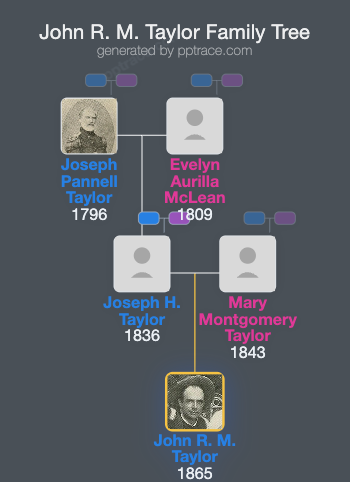
Family Tree
Tap  to expand more relatives
Introduction
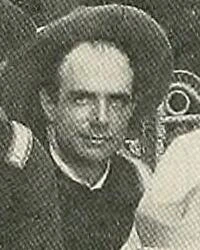
John Rodgers Meigs Taylor was born on January 13, 1865, and died on March 31, 1949. He served as a captain in the 14th Infantry Regiment of the United States Army. Taylor is known for overseeing the collection of documents known as the Philippine Insurgent Records, which comprised materials seized from Philippine revolutionaries during the Philippine–American War. He later held the position of military attaché at the U.S. embassy in Constantinople, Turkey, from 1911 to 1914. Taylor retired from the Army on July 9, 1918, with the rank of colonel.
He was a graduate of the United States Military Academy at West Point, class of 1889. In 1899, Taylor participated in the Boxer Rebellion in China before being transferred to the Philippines later that year. While in the Philippines, General Elwell Stephen Otis, then Military Governor, instructed him to collect and translate documents captured from insurgents for the U.S. Department of War and the U.S. Senate.
Taylor returned to the United States in 1901 and was assigned to the Bureau of Insular Affairs. His duties involved supervising the filing, selection, and translation of approximately 200,000 documents from the Philippine–American War. Over five years, he coordinated the transcription and translation (from Spanish and Tagalog) of relevant documents to produce a compilation aimed at presenting a "truthful version" of the Philippine revolution and the subsequent conflict with American colonial forces.
In his letter of transmittal, Taylor described the documents he handled as being among those found in papers captured from the insurgent government, noting their incompleteness but emphasizing their significance in illustrating the reliance of Emilio Aguinaldo on the opinions and advice of his associates, as well as internal opposition within Luzon, and strategies prior to attacks against American forces.
Taylor directed the Government Printing Office to typeset two volumes containing his historical analysis of U.S.-Philippine relations and three additional volumes compiling 1,340 original documents. However, the publication was delayed by Secretary of War William Howard Taft due to concerns about antagonizing Americans and Filipinos. A second publication effort was attempted in 1909, but the project was ultimately abandoned following critique from James A. LeRoy, Secretary Taft's former secretary. The compilation was later published in the Philippines in 1968 by the Eugenio Lopez Foundation.
Taylor was outspoken in his opinions, asserting that the Filipino people generally welcomed the suppression of the Katipunan and criticizing Aguinaldo’s government, claiming it did not represent the aspirations of the Filipino populace and relied on deception and violence. These views implied a biased perspective against Filipino revolutionary efforts.
Historian Renato Constantino, in the 1968 foreword to the document compilation, acknowledged the anti-Filipino bias but recognized the collection's importance as a source of original documents from the Philippine Revolution.
In 2002, historian John M. Gates noted that Taylor faced political censorship and died unaware of the significance his work would later attain for scholars. The "Virtual Philippine Revolutionary Records" was subsequently published online by Filipiniana.net in 2007.
John R. M. Taylor was born into a notable military family. His uncle, Union Army Brevet Major John Rodgers Meigs, was killed during the Civil War shortly before Taylor’s birth. His paternal grandfather was Army Brigadier General Joseph P. Taylor, brother of President Zachary Taylor. His maternal grandfather was Army Brevet Major General Montgomery C. Meigs, and his younger brother was Navy Admiral Montgomery M. Taylor. After his death in Washington, D.C., Taylor was buried at Arlington National Cemetery on April 5, 1949.