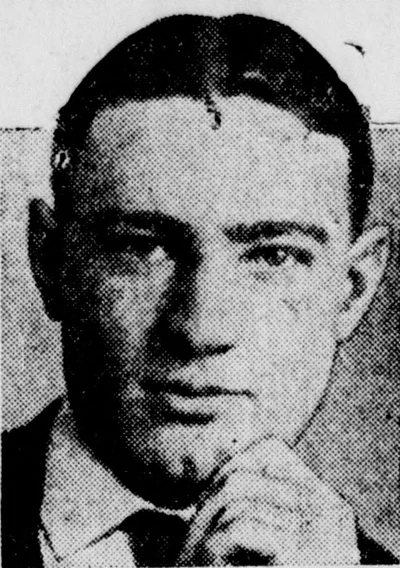
Richard F. Cleveland
| Name | Richard F. Cleveland |
| Title | American lawyer and civic leader (1897-1974) |
| Gender | Male |
| Birthday | 1897-10-28 |
| nationality | United States of America |
| Source | https://www.wikidata.org/wiki/Q27922171 |
| pptrace | View Family Tree |
| LastUpdate | 2025-11-17T06:41:29.367Z |
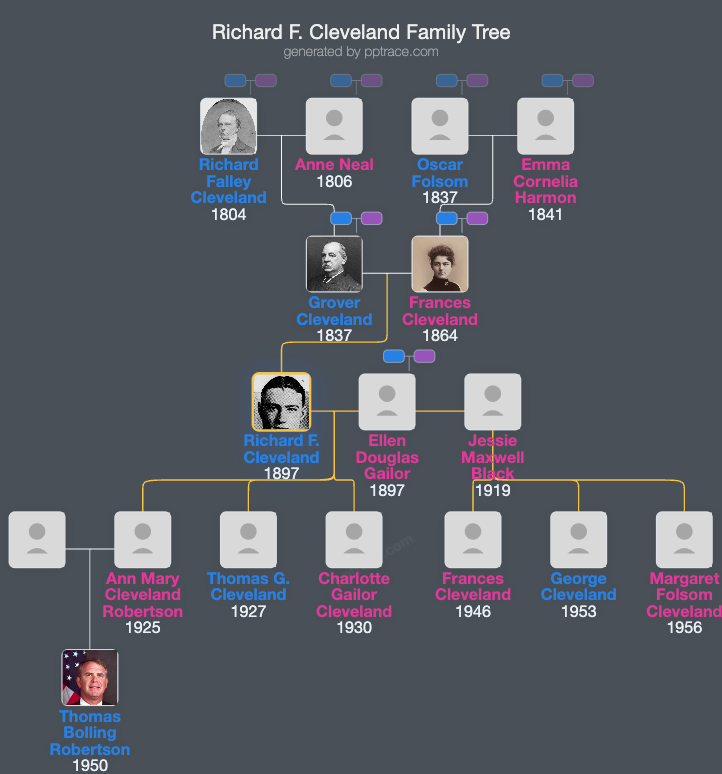
Family Tree
Tap  to expand more relatives
Introduction
Richard Folsom Cleveland was born on October 28, 1897, in Princeton, New Jersey. He was the second youngest son of Grover Cleveland, who served as the 22nd and 24th President of the United States, and Frances Folsom Cleveland. His paternal grandfather was Richard Falley Cleveland. Cleveland had four siblings: sisters Ruth (1891–1904), Esther (1893–1980), Marion (1895–1977), and brother Francis Grover (1903–1995).
He attended Phillips Exeter Academy before enrolling at Princeton University in 1915, where he served as freshman class president and participated in the freshman football team. During World War I, circa 1916 or 1917, Cleveland interrupted his studies to join the U.S. Marine Corps. In 1918, he served as military attache at the U.S. legation in Beijing (then called Peking) for six months. Later in 1918, he returned to Princeton and graduated in 1919. He obtained a Master of Arts degree from Princeton in 1921 and subsequently enrolled at Harvard Law School.
Cleveland became a lawyer and joined the law firm of Semmes, Bowen & Semmes in Baltimore, Maryland, in 1924. He maintained his association with the firm throughout his career, retiring in 1969 but continuing to work part-time until he passed away. The firm occupied the twenty-first floor at 10 Light Street in the Baltimore Trust Building, which was notable for being the tallest building south of Manhattan at the time.
In the realm of civic and political activities, Cleveland supported the presidential campaigns of Franklin D. Roosevelt, Alfred M. Landon, Wendell L. Willkie, and Dwight D. Eisenhower. In 1967, he served as a delegate to the Maryland Constitutional Convention.
During the late 1940s, Cleveland represented Whittaker Chambers, a senior editor at Time magazine, during the Hiss Case (1948–1950). Chambers's memoir describes Cleveland as being deliberate, shrewd, devout, and understanding. Chambers noted Cleveland’s perceptiveness regarding the case and recalled that Cleveland suspected espionage as a missing element. Cleveland was described as legally skilled, with Chambers recounting instances where Cleveland provided reassurance and support during critical moments, including before the grand jury and during the trials.
Cleveland married Ellen Douglass Gailor in 1923; she was a Vassar College and Columbia University graduate and the daughter of Episcopal bishop Thomas F. Gailor. The couple had three children: Anne Mary Cleveland, Thomas Grover Cleveland (1927–2020), and Charlotte Gailor Cleveland. They divorced in 1940 due to Ellen’s alcoholism. In 1943, Cleveland married Jessie Maxwell Black, daughter of Captain George Crosbie Black; this marriage produced three children: Frances Black Cleveland (known as Franma), George Maxwell Cleveland, and Margaret Folsom Cleveland, born March 10, 1956, and died August 3, 2021.
Cleveland was known to use his father’s White House desk in his law practice, which remained in the firm’s offices when he was an emeritus partner at the time of his death. He found it reassuring meeting Whittaker Chambers, and Chambers noted Cleveland’s initial reaction to him was one of relief.
Richard Cleveland died on January 10, 1974, in Baltimore, from chronic pulmonary illness. He was buried at Stevenson Cemetery in Tamworth, New Hampshire.