John Barnard
| Name | John Barnard |
| Title | Lord Mayor of London |
| Gender | Male |
| Birthday | 1685-01-01 |
| nationality | — |
| Source | https://www.wikidata.org/wiki/Q6220731 |
| pptrace | View Family Tree |
| LastUpdate | 2025-11-26T23:29:51.249Z |
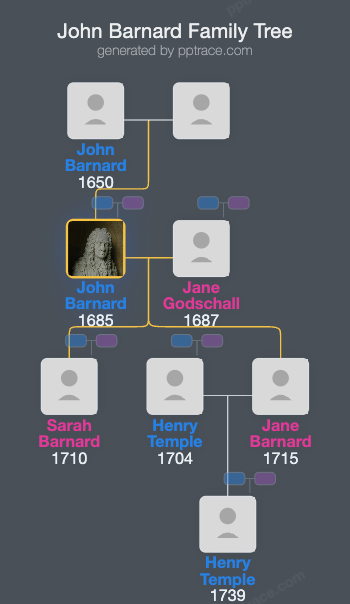
Family Tree
Tap  to expand more relatives
Introduction
Sir John Barnard (1685 – 28 August 1764) was a British merchant and politician associated with the Whig party. He served as the Lord Mayor of London in 1738.
Early Life and Family Background
Barnard was born in 1685 to a Quaker merchant in Reading, Berkshire. His father was also named John Barnard, and his mother was Sarah Payne, daughter of Robert Payne of Play Hatch in Oxfordshire, an area associated with Sonning. During his early life, Barnard abandoned the Quaker faith and is believed to have been baptized into Anglicanism by Henry Compton, who was the Bishop of London at the time.
Career and Political Activities
Initially, Barnard worked alongside his father as a merchant in the City of London. His political career began when he was elected as one of the four Members of Parliament (MPs) representing the City of London in the general election of 1722.
Barnard was known for actively promoting the commercial interests of the City of London. In 1734, he successfully introduced and promoted an Act of Parliament (7 Geo. 2. c. 8) aimed at prohibiting stock-jobbing, a practice considered infamous at the time. This act was later renewed in 1737 and became widely known as "Sir John Barnard’s Act."
In 1736, Barnard held the office of Sheriff of London, serving as one of the city's two sheriffs for the years 1736–37. During the parliamentary session of 1737, he continued advocating for legislation to reduce interest payments on the national debt, which he viewed as a measure to lower commercial taxation. He also proposed a Playhouse Act to regulate the operation of theaters within the City of London as a response to concerns about disorderly conduct and property damage. However, both proposals were defeated by the majority led by Sir Robert Walpole, the Prime Minister.
In the same year, Barnard was elected Lord Mayor of London, a position that reflected his influence and prominence. His opposition to Walpole's government became more pronounced after these legislative defeats, aligning with a faction led by Henry St John, 1st Viscount Bolingbroke, which rejected Walpole's legislative program. Although Barnard did not participate in the faction’s formal secession from Parliament in 1738, he continued to speak against the government on various issues.
Foreign Policy Views
In March 1738, Barnard expressed his views on European diplomacy, opposing Walpole’s preference for negotiated settlements to European conflicts. Barnard believed that accepting dishonorable peace was worse than war and suggested that nations tend to adopt an aggressive stance if they are perceived to tolerate insults. His statement indicated a view that respect and strength were essential in international relations.
Later Career and Inquiry
Walpole resigned as Prime Minister in February 1742, after which Barnard supported the initiation of an inquiry into Walpole’s conduct over the previous decade. Barnard was among the twenty-one members appointed to this investigation. However, efforts to gather evidence were hindered when witnesses largely refused to testify, and the key allegations of electoral bribery in Wendover and Orford were dismissed as hearsay.
Barnard supported a motion to introduce a Bill of Indemnity that would have pardoned witnesses from crimes if they testified against Walpole or his ministers. This legislation was defeated in the House of Lords.
Later Life and Death
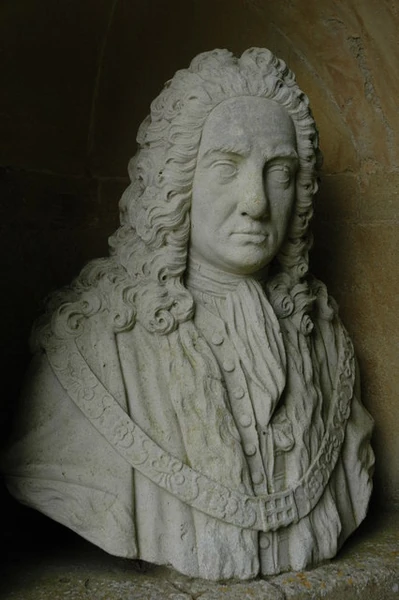
Barnard left Parliament at the 1761 general election. He died on 28 August 1764. His memorial includes an ornate bust displayed in the Temple of British Worthies at Lord Cobham's estate in Stowe, alongside statues of Elizabeth I and Sir Francis Drake. Additionally, Barnard Street in Savannah, Georgia, is named after him.