Fushimi Hiroyasu
| Name | Fushimi Hiroyasu |
| Title | Japanese prince |
| Gender | Male |
| Birthday | 1875-10-16 |
| nationality | Japan |
| Source | https://www.wikidata.org/wiki/Q285846 |
| pptrace | View Family Tree |
| LastUpdate | 2025-11-17T10:09:35.921Z |
Introduction
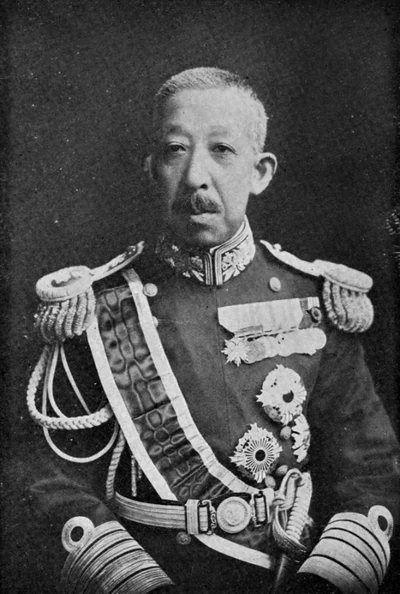
Marshal Admiral Prince Fushimi Hiroyasu (伏見宮博恭王, Fushimi-no-miya Hiroyasu ō) was born on October 16, 1875, in Tokyo, Japan, and died on August 16, 1946. He was a member of the Japanese imperial family and a career officer in the Imperial Japanese Navy, serving as chief of staff from 1932 to 1941.
He was the eldest son of Prince Fushimi Sadanaru (1858–1923), born as Prince Narukata, and one of his concubines. He was the twenty-third head of the Fushimi-no-miya, a cadet branch of the Japanese imperial family designated as one of the four shinnōke, which were eligible to succeed to the throne in the absence of a direct heir. Prince Hiroyasu was a second cousin to Emperor Shōwa (Hirohito) and Empress Kōjun, and was the nephew of Prince Kan'in Kotohito.
He succeeded to the title Kachō-no-miya on April 23, 1883, at which point he changed his name from Narukata to Hiroyasu. However, on January 16, 1904, he returned to the Fushimi-no-miya household.
On January 9, 1896, he married Tokugawa Tsuneko (1882–1939), the ninth daughter of Prince Tokugawa Yoshinobu, the last shōgun of Japan. They had six children:
- Prince Fushimi Hiroyoshi (December 8, 1897 – October 19, 1938)
- Princess Yasuko (1898–1919), who married Marquis Asano Nagatake
- Prince Hirotada (1902–1924), who became Prince Kachō Hirotada
- Prince Hironobu (1905–1970), who became Marquis Kachō Hironobu and succeeded as head of the Kachō-no-miya household
- Princess Atsuko (1907–1936), who married Count Kiyosu Yukiyasu
- Princess Tomoko (1907–1947), who married Prince Kuni Asaakira
- Prince Hirohide (1912–1943), who became Count Fushimi Hirohide and served in the Imperial Japanese Navy; he was killed in action.
Prince Hiroyasu entered the Imperial Japanese Naval Academy in April 1886 but resigned in September 1889 to study in Germany, enrolling at the Naval Academy of the Kaiserliche Marine in April 1892. He achieved the rank of Fähnrich zur See (midshipman) on March 30, 1893, and Oberfähnrich zur See (ensign) on April 20, 1894, before graduating on August 15, 1895. He served aboard the cruisers Itsukushima and Matsushima and spoke fluent German.
He was promoted to sub-lieutenant on December 1, 1897, and to lieutenant on December 27, 1897. He participated in the Russo-Japanese War (1904–1905), during which he was wounded aboard the battleship Mikasa at the Battle of the Yellow Sea in August 1904. He also served as executive officer on various ships, including the cruiser Niitaka, the battleship Okinoshima, and cruisers Naniwa and Nisshin. For his service during the war, he was awarded the Order of the Golden Kite, 4th class.
Promoted to commander on September 28, 1906, he studied in Great Britain between 1907 and 1910, returning to Japan to be promoted to captain on December 1, 1910. His commands included the cruiser Takachiho, the cruiser Asahi, and the battlecruiser Ibuki. He was promoted to rear admiral on August 31, 1913, vice admiral on December 1, 1916, and full admiral on December 1, 1922. He was a member of the Supreme War Council from 1920 onward and was a supporter of the Fleet Faction, advocating for the expansion of Japan’s naval capabilities beyond the constraints of the Washington Naval Treaty.
Prince Hiroyasu became the head of the Fushimi-no-miya in 1923 upon succeeding his father. He was appointed commander of the Sasebo Naval District in 1924. On February 2, 1932, he became the chief of the Imperial Japanese Navy General Staff, succeeding Admiral Abo Kiyokazu, and held this position until April 9, 1941. He was awarded the honorary rank of marshal admiral on May 27, 1932, and received the Collar of the Supreme Order of the Chrysanthemum in 1934.
During his tenure as Chief of Staff, the Imperial Japanese Navy Air Service conducted strategic bombing campaigns against Chinese cities, including Shanghai, Chongqing, Nanjing, and Guangzhou. The bombings of Nanjing and Guangzhou began in September 1937 and evoked international condemnation, including a resolution against Japan by the League of Nations’ Far Eastern Advisory Committee. He supported Japan’s southward expansion into French Indochina and the Dutch East Indies.
In 1945, the United States listed Hiroyasu as a major war criminal suspect. By that time, he was alive but reported as ill and was not captured or prosecuted.
He received numerous orders and decorations during his lifetime, including high-ranking Japanese honors.
Family Tree
Tap  to expand more relatives