Kuroda Kiyotaka
| Name | Kuroda Kiyotaka |
| Title | Japanese general (1840-1900) |
| Gender | Male |
| Birthday | 1840-10-16 |
| nationality | Japan |
| Source | https://www.wikidata.org/wiki/Q714049 |
| pptrace | View Family Tree |
| LastUpdate | 2025-11-17T10:07:33.795Z |
Family Tree
Tap  to expand more relatives
Introduction
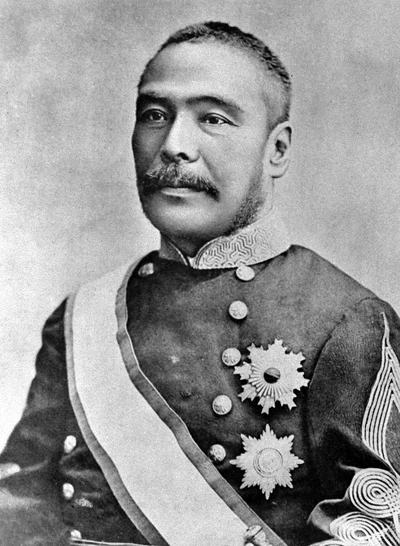
Count Kuroda Kiyotaka (黒田 清隆) was born on November 9, 1840, in the Satsuma Domain, Japan. He died on August 23, 1900. He was a Japanese politician and military officer who served as the second Prime Minister of Japan from 1888 to 1889. Kuroda was a member of the genrō, a group of senior statesmen during the Meiji era.
He was born into a samurai family serving the Shimazu clan of Kagoshima in Satsuma Domain, located on Kyūshū island. In 1862, Kuroda participated in the Namamugi incident, an event in which Satsuma retainers killed a British national who refused to bow to the daimyo's procession. This incident led to the Anglo-Satsuma War in 1863, in which Kuroda was actively involved. Following the conflict, he traveled to Edo (modern-day Tokyo) to study gunnery. He later returned to Satsuma and became involved in efforts to overthrow the Tokugawa shogunate, aligning with the Satsuma-Chōshū alliance.
During the Boshin War, Kuroda distinguished himself as a military leader, notably for sparing the life of Enomoto Takeaki at the Battle of Hakodate. After the establishment of the Meiji government, Kuroda became a pioneer diplomat, operating in Sakhalin (known in Japanese as Karafuto) in 1870, a territory claimed by both Japan and Russia. Due to concerns about Russian expansion eastward, he advocated for rapid development and settlement of Japan's northern frontier.
In 1871, Kuroda traveled to Europe and the United States for five months. Upon returning to Japan in 1872, he was appointed to oversee colonization efforts in Hokkaidō. In 1874, Kuroda was designated director of the Hokkaidō Colonization Office, where he organized a colonist-militia scheme involving unemployed ex-samurai and retired soldiers who would serve as both farmers and militia. During this period, he also promoted agricultural development by inviting overseas experts to advise on suitable crops and farming techniques suitable for Hokkaidō's climate.
Kuroda was dispatched as an envoy to Korea in 1875, leading to the negotiation of the Japan–Korea Treaty of 1876. In 1877, he participated in military operations to suppress the Satsuma Rebellion. Following the assassination of Ōkubo Toshimichi in 1878, Kuroda became the de facto leader of the Satsuma Domain. Around this time, he became embroiled in the Hokkaidō Colonization Office Scandal of 1881, attempting to privatize assets of the colonization program to a consortium formed by former Satsuma colleagues. The leaked sale terms caused public outrage, and the deal was canceled.
In 1881, Kuroda's wife died of lung disease. Rumors surfaced suggesting Kuroda had killed her in a drunken rage; her body was exhumed and examined, and Kuroda was cleared of wrongdoing. Nonetheless, rumors of his alcohol misuse persisted. He was appointed Minister of Agriculture and Commerce in 1887.
Kuroda became Prime Minister in 1888, succeeding Itō Hirobumi. His tenure saw the promulgation of the Meiji Constitution. A major issue during his administration was Japan's failure to revise the unequal treaties with Western powers. Draft proposals by his foreign minister, Ōkuma Shigenobu, became public in 1889 and faced opposition, especially plans involving the appointment of foreigners as judicial officers. Following an assassination attempt attributed to treaty opponents on October 18, 1889, Kuroda agreed to halt treaty revision efforts, leading to his resignation on October 25, 1889. He was succeeded by Sanjō Sanetomi, and later, Yamagata Aritomo assumed the office.
After resigning as Prime Minister, Kuroda served as Minister of Communications in 1892 under the second Itō cabinet. He was appointed a genrō in November 1889 and became President of the Privy Council in 1895. Kuroda died in 1900 from a brain hemorrhage; his funeral was presided over by Enomoto Takeaki. His grave is located at Aoyama Cemetery in Tokyo.
He received several honors, including the Grand Cordon of the Order of the Rising Sun in 1877, the Grand Cordon of the same order with Paulownia Flowers in 1895, and the Grand Cordon of the Order of the Chrysanthemum posthumously in 1900. He was granted the peerage of Count on July 7, 1884, and was appointed a genrō on November 1, 1889.