Ali Tehrani
| Name | Ali Tehrani |
| Title | Iranian writer and cleric |
| Gender | Male |
| Birthday | 1926-04-25 |
| nationality | Iran |
| Source | https://www.wikidata.org/wiki/Q15782419 |
| pptrace | View Family Tree |
| LastUpdate | 2026-05-07T09:15:47.379Z |
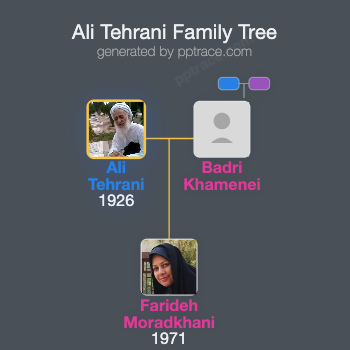
Family Tree
Tap  to expand more relatives
Introduction
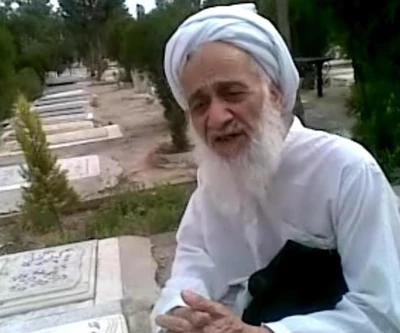
Ali Tehrani, born Ali Moradkhani Arangeh on 25 April 1926, was an Iranian Shia Islamic theologian and writer. He died on 19 October 2022 at the age of 96. His place of birth is not specified in the available information.
Tehrani was active in political and religious fields throughout his life. He pursued theological studies and became a Mujtahid, a senior Islamic scholar qualified to interpret Shia Islamic law. He was a disciple of Seyyed Hossein Borujerdi and Ruhollah Khomeini, two prominent religious figures in Iran.
During his youth, Tehrani opposed the Pahlavi dynasty, which governed Iran prior to the Islamic Revolution. He was arrested, imprisoned, and exiled by the regime due to his political activities. Following the Iranian Revolution in 1979, he continued his engagement in political affairs, serving as the representative of Khorasan province in the Assembly of Experts for the Constitution.
Tehrani was detained in Mashhad after the Revolution and was released after several months. He objected to certain appointments made by Khomeini, such as the appointment of Muhammad Khatami as Tehran's Friday Prayer Imam, and in 1984 he secretly fled Iran to Iraq. From Iraq, he issued broadcasts through Baghdad's Farsi-speaking radio and television, in which he voiced opposition to the Islamic Republic and its leadership. He returned to Iran in 1995, after which he was sentenced to 20 years in prison; he was released in 2005 after serving about ten years.
Ali Tehrani was connected to wider political disputes within Iran. He advocated for a more liberal political system and supported the "liberal" faction in the post-revolution government. According to CIA reports, he supported the People's Mojahedin Organization of Iran (MEK). In the 1980 presidential election, he supported candidate Abolhassan Banisadr, in opposition to other prominent figures such as Ali Khamenei, Mohammad Hosseini Beheshti, and Akbar Hashemi Rafsanjani, who favored Jalaleddin Farsi. Tehrani raised concerns about Farsi's Afghan origins, arguing he should be ineligible, and his support contributed to Banisadr's victory.
He was involved in disputes with Iranian leadership over various issues, including the case of Abbas Amir-Entezam, who was sentenced to life imprisonment on charges of spying for the U.S. Tehrani claimed that some members of the Islamic Republic leadership, including Khamenei, Rafsanjani, and Beheshti, had collaborated with Entezam.
Tehrani's personal life included marriage to Badri Khamenei, sister of Iran's Supreme Leader Ali Khamenei, in the 1950s. They had five children: three daughters and two sons. His daughter Farideh Moradkhani is noted for her opposition to the Iranian government and gained attention during protests in 2022. Four of his children remained distant from politics.
Following the decline of his political influence, especially after his exile and opposition activities, Tehrani largely remained out of the public eye after his release from prison in 2005. His wife, Badri Khamenei, left Iran illegally with their children when her brother refused her permission to join her husband abroad.
Ali Tehrani's life was marked by political activism, religious scholarship, and opposition to certain policies of the Iranian government.