Yuichiro Hata
| Name | Yuichiro Hata |
| Title | Japanese politician (1967-2020) |
| Gender | Male |
| Birthday | 1967-07-29 |
| nationality | Japan |
| Source | https://www.wikidata.org/wiki/Q259722 |
| pptrace | View Family Tree |
| LastUpdate | 2025-11-17T06:48:09.411Z |
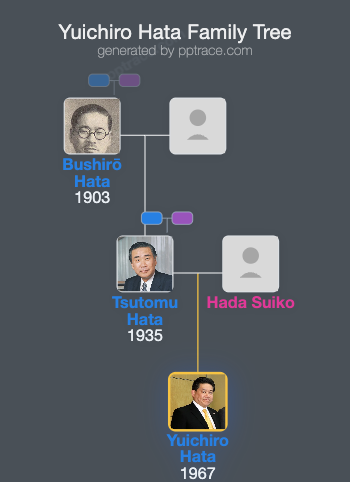
Family Tree
Tap  to expand more relatives
Introduction
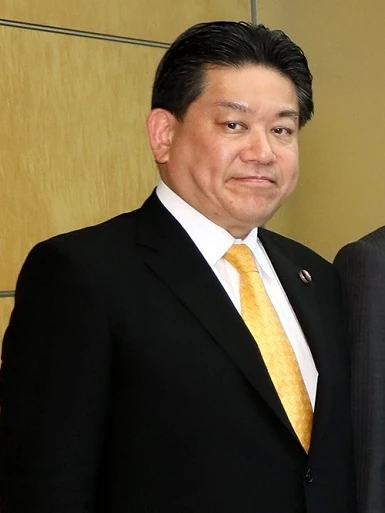
Yuichiro Hata (羽田 雄一郎, Hata Yūichirō) was born on July 29, 1967, in Setagaya, Tokyo, Japan. He was a Japanese politician affiliated with the Constitutional Democratic Party of Japan (CDP) and served as a member of the House of Councillors in the National Diet of Japan. Hata graduated from Tamagawa University with a Bachelor of Arts degree in March 1993.
During his university years, he was a member of the Itochu Foundation. Early in his career, he served as a secretary to his father, Tsutomu Hata, who was a Prime Minister of Japan and a member of the House of Representatives.
Hata was first elected to the House of Councillors in 1999, beginning his parliamentary career. He was reelected for a total of five terms, maintaining his seat until his death in 2020. Throughout his political career, he was associated with several political parties, including the Democratic Party of Japan (DPJ), the Democratic Party for the People (DPP) following a merger of the DPJ with Kibō no Tō, and ultimately the Constitutional Democratic Party of Japan (CDP) after the dissolution of the DPP.
On June 4, 2012, Hata was appointed as Minister of Land, Infrastructure, Transport and Tourism in the cabinet of Prime Minister Yoshihiko Noda. His tenure lasted until December 26, 2012, when the cabinet resigned following the election loss of the DPJ to the Liberal Democratic Party (LDP). During his service as a minister, Hata was among the first cabinet members of the DPJ to openly visit the Yasukuni Shrine on August 15, 2012, the anniversary of the end of World War II, despite opposition from South Korea and requests from Prime Minister Noda not to do so.
Hata held political positions aligned with Japan's center-left parties. He was opposed to the revision of Article 9 of the Japanese Constitution, which prohibits Japan from engaging in war, and expressed critical views on Japan's reliance on nuclear power following the Fukushima Daiichi nuclear disaster. He advocated for the eventual abolition of nuclear energy in Japan and opposed Japan's support for nuclear projects abroad. Additionally, Hata supported agricultural protectionism and was cautious about free trade agreements such as the Trans-Pacific Partnership.
He held the position of the initial Secretary-General of the Upper House caucus of the CDP at the time of his death.
Yuichiro Hata died on December 27, 2020, in Tokyo, at the age of 53, due to COVID-19 while being transported to the University of Tokyo Hospital. His death was notable as he was the first Japanese legislator to succumb to the virus during the COVID-19 pandemic in Japan.