Hara Takashi
| Name | Hara Takashi |
| Title | Prime Minister of Japan from 1918 to 1921 |
| Gender | Male |
| Birthday | 1856-03-15 |
| nationality | Japan |
| Source | https://www.wikidata.org/wiki/Q315553 |
| pptrace | View Family Tree |
| LastUpdate | 2025-11-17T10:08:17.298Z |
Family Tree
Tap  to expand more relatives
Introduction
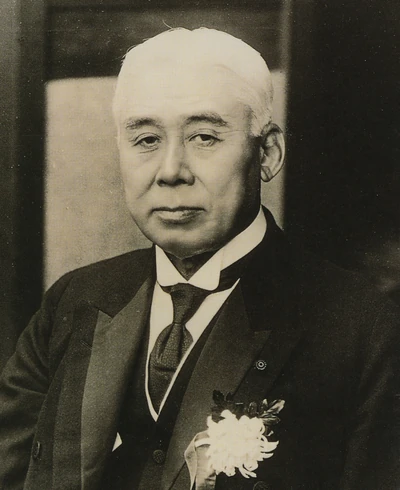
Hara Takashi (原 敬; born 15 March 1856, died 4 November 1921) was a Japanese politician who served as Prime Minister of Japan from 1918 until his assassination in 1921. He was the first individual in Japan's history to hold the office of Prime Minister who was a commoner (heimin) and a Christian. His tenure is notable for being characterized by efforts toward moderate reform and Japan's participation in international organizations such as the League of Nations.
Hara was born in Motomiya, a village near Morioka in Mutsu Province, into a samurai family serving the Nanbu Domain. His family opposed the Meiji Restoration, which led to significant political changes and the overthrow of the feudal domain system. At age 15, he moved to Tokyo by boat and initially failed to gain admission to the Imperial Japanese Naval Academy. Subsequently, he attended the Marin Seminary, where he learned French fluently. He later enrolled in the law school of the Ministry of Justice, which later became the University of Tokyo, but he left before graduation due to his involvement in a student protest.
At age 17, Hara was baptized as a Catholic, adopting the name David. Despite speculation that his conversion was motivated by personal gain, he remained publicly a Christian until his death. He chose to identify as a commoner at age 19, distancing himself from his samurai family and their aristocratic rank. This decision was consistent throughout his life, as he refused offers to be elevated in social rank, believing it would hinder his ability to connect with the common people and facilitate entry into the House of Representatives.
Hara's early career included work as a newspaper reporter from 1879 to 1882, during which he protested attempts by editors to align the paper with the Rikken Kaishintō party. In 1882, under the recommendation of Inoue Kaoru, then Foreign Minister, Hara joined the Ministry of Foreign Affairs. He served as consul-general in Tianjin, first secretary at the Japanese embassy in Paris, Vice-minister of Foreign Affairs, and ambassador to Korea under Mutsu Munemitsu. Later, he left diplomatic service to manage a newspaper company, the Mainichi Shimbun, based in Osaka.
In 1900, Hara joined Itō Hirobumi's newly formed Rikken Seiyūkai party, becoming its first secretary-general. He was elected to the House of Representatives representing Iwate Prefecture and served as Minister of Communications in the Fourth Ito Cabinet. Between 1906 and 1913, he served as Home Minister in multiple cabinets, during which he implemented reforms aimed at reducing the influence of non-elected bureaucrats by promoting meritocracy and transparency within local and central government agencies.
Hara became the president of Rikken Seiyūkai in 1914, succeeding Saionji Kinmochi. His leadership saw the party lose and then regain a majority in the Diet in 1915 and 1917, respectively.
In 1918, following the resignation of Prime Minister Terauchi Masatake after the Rice Riots of 1918, Hara was appointed as Prime Minister on 28 September. His cabinet was the first in Japan headed by a commoner and included a temporary command of the Navy Ministry during the Washington Naval Conference. His administration was characterized by cautious political positioning, avoiding aggressive reforms such as immediate universal suffrage legislation, and by participation in the Paris Peace Conference and the establishment of the League of Nations. Hara implemented more lenient policies towards Korean colonies, seeking limited self-rule while maintaining overall Japanese control.
Hara's government oversaw military and diplomatic actions, including the Siberian intervention and suppression of the March 1st Movement in Korea, which involved both military operations and colonial administration reforms. His tenure was marked by internal political tension, particularly with conservatives, militarists, and ultranationalists who viewed him with suspicion or hostility.
On 4 November 1921, Hara was assassinated at Tokyo Station by Nakaoka Kon'ichi, a railroad switchman and right-wing nationalist, motivated by allegations of corruption, zaibatsu influence, and his handling of overseas incidents. Nakaoka was convicted of murder, initially sentenced to death, but later given life imprisonment before being released in 1934.
Following Hara's death, he was succeeded temporarily by Uchida Kōsai, then by Takahashi Korekiyo as the next Prime Minister. Known for leading a modest lifestyle, Hara left few assets in his will, but his diary was left to be made public after some years, reflecting on his personal and political life.