
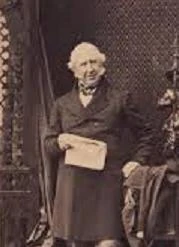
William Bowles
| Name | William Bowles |
| Title | British politician (1780-1869) |
| Gender | Male |
| Birthday | 1780-01-01 |
| nationality | Great Britain |
| Source | https://www.wikidata.org/wiki/Q8005773 |
| pptrace | View Family Tree |
| LastUpdate | 2025-11-26T23:29:50.510Z |
Family Tree
Tap  to expand more relatives
Introduction
Sir William Bowles, full title Admiral of the Fleet Sir William Bowles, KCB, was born on 25 May 1780 and died on 2 July 1869. He was a senior officer of the Royal Navy and also involved in politics as a member of the Conservative Party.
Early Life and Family Background:
William Bowles was the son of William Bowles and Dinah Bowles. His maternal grandfather was Admiral Sir Thomas Frankland.
Naval Career Beginnings:
Bowles joined the Royal Navy in September 1796. His initial assignment was to the third-rate ship HMS Theseus in the Channel Squadron during the French Revolutionary Wars. He served off Cádiz and was promoted to midshipman, transferring to HMS Captain in June 1797. Subsequently, he served aboard the corvette HMS Daphne in the North Sea in early 1798, and in November 1800, he transferred to the fifth-rate HMS Hydra.
Throughout the early 1800s, Bowles saw successive service on various ships, including HMS Acasta, HMS Driver, HMS Cambrian, HMS Leander, and HMS Milan. He was promoted to lieutenant on 30 August 1803. His assignments included duties on the North America and West Indies Station, the Mediterranean Fleet, and service off the West Coast of Africa.
He was promoted to commander on 22 January 1806 and became the commanding officer of the sloop HMS Zebra in March 1807. Notably, he participated in the bombardment of Copenhagen in September 1807 during the Napoleonic Wars. Bowles was promoted to captain on 13 October 1807 and commanded the third-rate HMS Warspite in June 1809, followed by the fifth-rate HMS Medusa in June 1810.
Notable Naval Engagements:
While commanding HMS Medusa, Bowles participated in operations off the north coast of Spain, including leading a naval brigade in a raid on Santoña. In 1811, he commanded HMS Aquilon in the Baltic Sea, and later HMS Nemesis for duties off the West Coast of Africa. During 1813, he undertook trade protection duties near the Río de la Plata.
Advanced Positions and Leadership:
In 1816, Bowles was appointed Commander-in-Chief of the South America Station, flying his broad pennant in the fifth-rate HMS Amphion. By early 1822, he commanded the yacht HMY William & Mary and later became Comptroller-General of the Coast Guard in July 1822.
Contributions to Naval Administration:
In 1830, Bowles published "Remarks on the Conduct of the Naval Administration of Great Britain," advocating for innovations such as the introduction of steam warships and the establishment of a gunnery school, which led to the formation of HMS Excellent. He was made a Companion of the Order of the Bath (CB) on 12 April 1839.
Promotion and Naval Innovations:
Bowles was promoted to rear admiral on 23 November 1841. In 1843, he commanded the Squadron of Evolution, testing naval warfare innovations aboard HMS Caledonia. His political career included serving as Third Naval Lord in the Second Peel ministry beginning in May 1844, and as a Member of Parliament for Launceston, Cornwall, from 1844 until the government’s resignation in 1846.
Later Life and Further Contributions:
He was promoted to vice-admiral on 8 March 1852, and in the 1850s, he continued publishing papers on naval affairs, including "Considerations on the Late Naval War" (1856) and "A Recommendation for Abolishing the Rank of Commander in the Royal Navy" (1858).
He was appointed Commander-in-Chief, Portsmouth, in March 1859, but resigned later that year due to mishandling of an incident involving HMS Princess Royal. Bowles was advanced to Knight Commander of the Order of the Bath (KCB) on 10 November 1862. Later honors included appointments as Rear-Admiral of the United Kingdom (1865), Vice-Admiral of the United Kingdom (1866), and ultimately Admiral of the Fleet on 15 January 1869.
Death:
William Bowles died at his residence at 8 Hill Street, London, on 2 July 1869.
Family:
On 9 August 1820, Bowles married The Hon. Frances Temple, daughter of Henry Temple, 2nd Viscount Palmerston. Frances was the sister of Henry John Temple, 3rd Viscount Palmerston, who served as Secretary at War and Prime Minister. The marriage produced no children.
