John Monckton, 1st Viscount Galway
| Name | John Monckton, 1st Viscount Galway |
| Title | Member of the English Parliament |
| Gender | Male |
| Birthday | 1695-01-01 |
| nationality | — |
| Source | https://www.wikidata.org/wiki/Q6249138 |
| pptrace | View Family Tree |
| LastUpdate | 2025-11-26T12:20:50.259Z |
Family Tree
Tap  to expand more relatives
Introduction
John Monckton, 1st Viscount Galway (circa 1695 – 15 July 1751), was a British politician associated with the Whig party who served in the House of Commons from 1727 until his death in 1751. He was created the first Viscount Galway in the Irish peerage in 1727.
**Early Life**
Monckton was the eldest son of Theodosia (née Fountaine) Monckton and Robert Monckton (1659–1722). His father held manors near Howden and Barnsley in Yorkshire and was known for his opposition to James II, leading to exile in the Netherlands and participation in William of Orange’s invasion during the Glorious Revolution of 1688. Robert Monckton subsequently gained political influence, winning the borough of Pontefract in the 1695 general election and later representing Aldborough. The Monckton family traced their lineage to Sir Philip Monckton of Cavil and Anne Eyre of Highlow Hall. His mother was the daughter and heiress of John Fountaine of Melton-on-the-Hill, Yorkshire. John Monckton attended Trinity Hall, Cambridge, beginning his studies in 1713.
**Political Career**
Monckton first contested the seat of Clitheroe as a Whig candidate in the 1722 general election but was unsuccessful. He attempted to secure a seat through purchasing burgages—property holdings influencing elections—but initially was unsuccessful in Clitheroe. Subsequently, he sold these burgages to Sir Nathaniel Curzon, a Tory candidate, as part of a political arrangement wherein Curzon deferred support to Monckton for the next Parliament.
In the 1727 general election, Monckton successfully gained election as MP for Clitheroe. Shortly thereafter, on 17 July 1727, the Whig government under Robert Walpole elevated him to the Irish peerage as Viscount Galway and Baron of Killard. Irish peerages permitted holders to sit in the British House of Commons, and this peerage was an acknowledgment of Monckton’s political alignment and service.
In 1729, Galway purchased 77 burgages in Pontefract for £6,000 from families including the Blands, Dawneys, and Franks, granting him influence in that borough. He then held control jointly with Sir William Lowther, nominating candidates at future elections. Upon losing his seat in Clitheroe in the 1734 election, he was elected as MP for Pontefract alongside Lowther. He served in this capacity and benefited from government patronage, including appointments such as Commissioner of Revenue in Ireland (1734–1748).
Galway was re-elected as MP for Pontefract in the 1741 general election. In 1747, he moved his parliamentary seat to his eldest son, William. However, in a by-election in 1749, he re-entered Parliament for Pontefract to obtain a position as Surveyor-General of Lands, Woods, and Forests in England and Wales, a role recommended by Prime Minister Henry Pelham, his brother-in-law. Pelham's communication highlighted the expenses Galway had incurred to attain his position and borough influence. Galway held the offices of Surveyor-General and MP for Pontefract until his death in 1751.
**Personal Life**
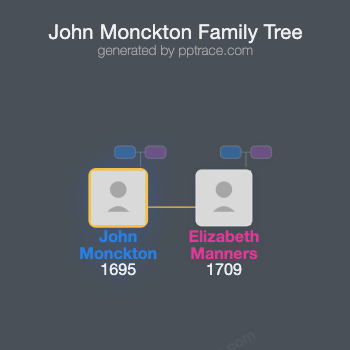
Galway’s first wife was Lady Elizabeth Manners (1709–1730), daughter of John Manners, 2nd Duke of Rutland. They married before her death on 22 March 1730 and had two children: William Monckton-Arundell (1725–1772), who succeeded as the 2nd Viscount Galway, and Robert Monckton (1726–1782), a notable Army General and colonial administrator who remained unmarried but had three sons and a daughter.
He married secondly Jane Westenra in November 1734, daughter of Henry Warner Westenra of Rathleagh, Queen’s County, Ireland. Their children included John Monckton (1739–1830), Henry Monckton (1740–1778), who was killed at the Battle of Monmouth, Edward Monckton (1744–1832), an MP for 32 years, and Mary Monckton (1748–1840), a political hostess who married Edmund Boyle, 7th Earl of Cork.
Galway died on 15 July 1751; Lady Galway survived until 1788.
**Estates and Affiliations**
Upon his father’s death in 1722, Monckton inherited Hodroyd Hall in Yorkshire, a family estate since the early 17th century. In 1725, he purchased the Serlby estate in Nottinghamshire and constructed Serlby Hall, assembling a notable art collection. He was a member of the Society of Dilettanti.