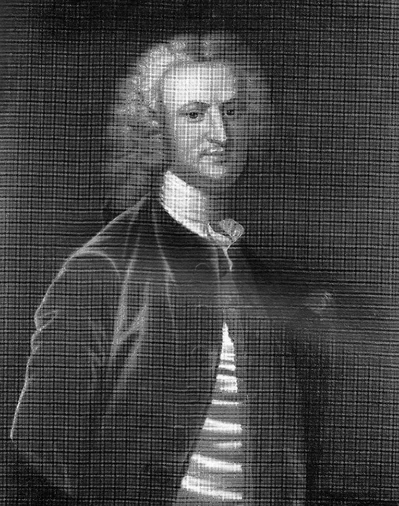
Benedict Swingate Calvert
| Name | Benedict Swingate Calvert |
| Title | American politician and judge (1722-1788) |
| Gender | Male |
| Birthday | 1722-01-27 |
| nationality | United States of America |
| Source | https://www.wikidata.org/wiki/Q4887318 |
| pptrace | View Family Tree |
| LastUpdate | 2025-11-17T06:36:44.118Z |
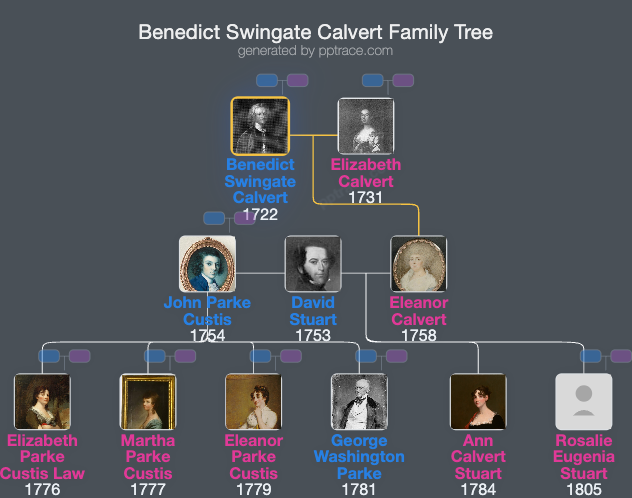
Family Tree
Tap  to expand more relatives
Introduction
Benedict Swingate Calvert (January 27, 1722 – January 9, 1788) was a colonial planter, politician, and Loyalist in Maryland during the American Revolution. He was the illegitimate son of Charles Calvert, 5th Baron Baltimore, who served as the Proprietor Governor of Maryland from 1699 to 1751. His mother’s identity is not definitively known; some sources suggest she may have been Melusina von der Schulenburg, Countess of Walsingham, the daughter of King George I of Great Britain and his mistress Melusine von der Schulenburg, Duchess of Kendal. Other sources indicate his mother was a woman of high rank in England. His birth has been recorded as January 27, 1722, according to a grave memorial located in St. Thomas Episcopal Church in Croom, Maryland. Variations in the recorded year include 1724, 1730, and 1732.
Around 1736 or 1737, Calvert was sent by the Calvert family to the Province of Maryland, then a sparsely populated colony with approximately 120,000 residents. During this time, it is believed he was transported aboard a frigate commanded by Admiral Edward Vernon, although this is less certain. Upon arrival, he was placed under the care of Dr. George Steuart, an Edinburgh-trained physician and a political ally of the Calvert family. Benedict was educated under a tutor, Onorio Razzolini, an Italian immigrant who held a public office in the colonies. He grew up in Annapolis at Steuart’s residence on Francis Street, near the Maryland State House.
In 1738, he witnessed a will under his childhood name, Swingate, indicating that his father's identity may not have been publicly known at that time. Later, he adopted the Calvert surname. His early life included instances of physical discipline, such as being whipped by a town bully. He married Elizabeth Calvert in 1748, the daughter of Maryland Governor Charles Calvert and Rebecca Gerard. Elizabeth was a wealthy heiress after the deaths of her parents. Their marriage was announced in the Maryland Gazette, and they resided at Elizabeth’s house in Annapolis.
Following the death of his father, Charles Calvert, 5th Baron Baltimore, in 1751, Benedict inherited approximately 10,000 acres of land at Anne Arundel Manor. However, his half-brother Frederick Calvert, the 6th Baron Baltimore, challenged the will, successfully invalidating Benedict's inheritance. Despite this, Calvert's career advanced; in 1755, he was appointed as a judge of the Land Office and served alongside his former guardian, Dr. George Steuart.
In 1751, Calvert inherited Mount Airy, a 4,000-acre plantation near Upper Marlboro, Maryland, historically associated with his Great-grandfather, Charles Calvert, 3rd Baron Baltimore. He expanded the estate, mainly cultivating tobacco, and by the 1770s, operated a profitable plantation with over 150 slaves. He was passionate about horse breeding and participated in equestrian competitions.
His family also formed alliances through marriage; in 1774, his daughter Eleanor Calvert married John Parke Custis, stepson of George Washington. Although initially opposed by Washington, the marriage took place at Mount Airy with Washington's attendance.
During the American Revolution, Calvert was aligned with Loyalist interests. He served as the Patuxent district customs collector and was a member of the Maryland political elite until the revolutionary upheaval. His political influence ended after Maryland's colonial government was overthrown in 1776. In 1774, he documented the burning of the ship The Peggy Stewart, an event tied to the colonial protests against British taxation. Calvert resigned from his position as Judge of the Land Office in 1777 due to the increasing instability and threats to his safety.
Despite his Loyalist stance, Calvert did not actively participate in the fighting, and at times provided provisions to the Continental Army. His personal life included his daughter Elizabeth’s marriage to Charles Steuart in 1780. Benedict Swingate Calvert died in 1788.