Charles Wolfran Cornwall
| Name | Charles Wolfran Cornwall |
| Title | British politician |
| Gender | Male |
| Birthday | 1735-06-15 |
| nationality | Great Britain |
| Source | https://www.wikidata.org/wiki/Q5083678 |
| pptrace | View Family Tree |
| LastUpdate | 2025-11-26T23:26:36.150Z |
Family Tree
Tap  to expand more relatives
Introduction
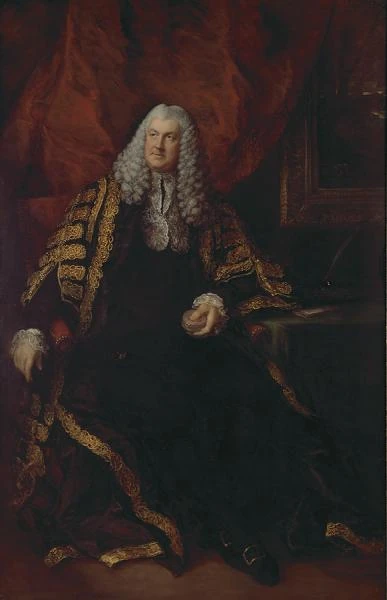
Charles Wolfran Cornwall (15 June 1735 – 2 January 1789) was a British politician who served in the House of Commons from 1768 until his death in 1789. He held the position of Speaker of the House of Commons from 1780 to 1789.
Born on 15 June 1735, Cornwall was the only son of Jacobs Cornwall and Elizabeth Forder. His parents were second cousins, both being great-grandchildren of Humphrey Cornewall. He was baptized ten days after his birth at St Thomas' church in Winchester. Cornwall's paternal grandfather was Admiral Charles Cornewall, and his maternal great-grandfather was Captain Wolfran Cornewall. His father, Jacobs Cornwall, died on 8 August 1736, when Charles was approximately one year old.
Although his names reflected naval associations, Cornwall was raised for a career in law. He began his education at Winchester in 1748, proceeded to New College, Oxford, and began legal training at Lincoln's Inn in 1755. In 1756, Cornwall inherited a substantial estate from his uncle, Sir Robert de Cornwall, who died childless. Despite being called to the bar at Gray's Inn in 1757 and becoming a bencher there in 1770, Cornwall's primary involvement was in politics rather than legal practice.
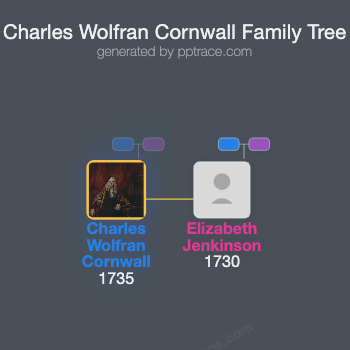
Cornwall’s initial entry into political life was facilitated through his connection with his cousin Charles Jenkinson. Cornwall married Elizabeth Jenkinson, Charles Jenkinson's sister, on 17 August 1764. In 1763, Cornwall expressed interest in obtaining a parliamentary seat but was initially involved as a Commissioner for examining the German Accounts (1763–1765). His political alignment shifted over time, moving away from Jenkinson's circle toward associations with the Marquess of Rockingham and the Earl of Shelburne.
In 1768, Cornwall secured a seat representing Grampound, a constituency controlled by Shelburne. He was an active speaker opposing the government on various issues, with particular focus on the East Indies. In 1773, he declined a governmental offer to supervise the East India Company's activities in Bengal. He supported the government's response to the American Revolution, a stance that contributed to his political realignment.
In 1774, Cornwall joined the government side, receiving an annual pension and a seat on the Treasury Board. He was elected as the Member of Parliament for Winchelsea, a 'rotten borough' associated with the Treasury, and later represented Rye. He sold his ancestral estate at Berrington in 1775, which was subsequently rebuilt and landscaped.
On 22 September 1780, Cornwall was appointed Justice in Eyre north of the Trent, a sinecure position. Later that year, he was elected Speaker of the House of Commons, succeeding Fletcher Norton. The election was supported by the government, and the King regarded Cornwall as a respectable choice. He was made a member of the Privy Council shortly thereafter.
As Speaker, Cornwall was known for his physical presence and occasional unconventional habits, such as drinking porter during debates. He notably used his casting vote in 1786 to defeat a government proposal related to fortifications—an early demonstration of what became known as Speaker Denison's rule. He was involved in maintaining parliamentary order and procedural innovation, including allowing questions to be raised in debates.
Cornwall was the first Speaker of the House of Commons to die while in office. His last session was on 29 December 1788. He fell ill with a "feverish cold" and died on 2 January 1789. An autopsy revealed the presence of large quantities of cold water in his stomach and an abscess caused by a sharp-pointed collar bone pressing on his lungs. He was buried in the chapel of the Hospital of St Cross, where a monument by John Francis Moore commemorates him. His estate was primarily inherited by his wife during her lifetime and later assigned to the children of his distant cousin, Sir George Cornewall, as they had no direct descendants.