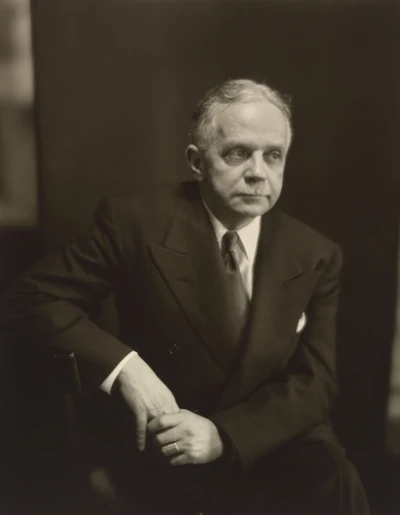
Walter White
| Name | Walter White |
| Title | American civil rights activist (1893-1955) |
| Gender | Male |
| Birthday | 1893-07-01 |
| nationality | United States of America |
| Source | https://www.wikidata.org/wiki/Q3565918 |
| pptrace | View Family Tree |
| LastUpdate | 2025-11-17T06:38:53.220Z |
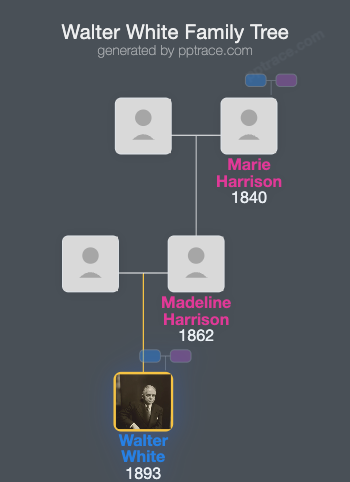
Family Tree
Tap  to expand more relatives
Introduction
Walter Francis White was born on July 1, 1893, in Atlanta, Georgia, to George and Madeline White. His father was a postal worker and an alumnus of Atlanta University, a historically black college, while his mother was a graduate of the same institution and worked as a teacher. White's ancestry was mixed, with European and African heritage; he was notably light-skinned, with blue eyes and blond hair, and he believed that only a small fraction of his great-great-great-grandparents were of black descent. His maternal family traced its roots to Dilsia, an enslaved woman, and her owner, William Henry Harrison, the 9th President of the United States.
White attended Atlanta public schools, graduating from Atlanta University High School in 1912 and from Atlanta University in 1916. His education exposed him to the intellectual influences of W. E. B. Du Bois, who had already moved to the North before White enrolled. White was affiliated with the First Congregational Church in Atlanta, a significant social and political institution within the African-American community.
In his early career, White worked at the Standard Life Insurance Company and was involved in organizing a chapter of the NAACP. Invited by James Weldon Johnson, he moved to New York City in 1918 to work at the NAACP's national headquarters. Initially serving as assistant secretary, he later became an investigator and undercover agent, traveling to the South to document and combat lynchings and racial violence. His light skin sometimes enabled him to pass as white, which aided in protecting his safety during investigations.
White's activism extended into legal and political realms. He organized efforts for improved education for Black children in Atlanta and participated in the NAACP's broader campaigns against segregation and disenfranchisement. In 1934, he joined the Advisory Council for the Virgin Islands but resigned a year later in protest against President Franklin D. Roosevelt's inaction regarding anti-lynching legislation.
In 1922, White married Gladys Powell; they had two children, Jane White, an actress, and Walter Carl White, who lived primarily in Germany. The marriage lasted 27 years before ending in divorce in 1949. Subsequently, White married Poppy Cannon, a white South African magazine editor, a decision that was controversial among his colleagues and led to alienation from his family. His son from his first marriage changed his name to Carl Darrow, signaling his disapproval.
During his career, White collaborated with President Harry S. Truman on the desegregation of the armed forces, providing him with a draft for the executive order that enacted this policy. Under White's leadership, the NAACP established its Legal Defense Fund, which pursued numerous legal challenges against segregation and voting restrictions. Among these efforts was the landmark 1954 Supreme Court decision in Brown v. Board of Education, which declared racial segregation in public schools unconstitutional.
Throughout his tenure as head of the NAACP from 1929 until his death in 1955, White significantly expanded the organization’s membership, increasing it to nearly 500,000 members. His leadership period was marked by strategic advocacy, legal challenges, and increased activism against racial discrimination in the United States.
Walter White passed away on March 21, 1955, in New York City.