
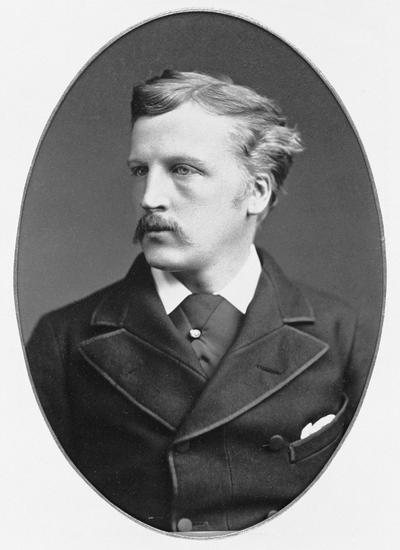
John Campbell, 9th Duke Of Argyll
| Name | John Campbell, 9th Duke Of Argyll |
| Title | British nobleman and 4th Governor General of Canada (1845-1914) |
| Gender | Male |
| Birthday | 1845-08-06 |
| nationality | United Kingdom of Great Britain and Ireland |
| Source | https://www.wikidata.org/wiki/Q334971 |
| pptrace | View Family Tree |
| LastUpdate | 2025-11-12T01:17:39.384Z |
Family Tree
Tap  to expand more relatives
Introduction
John George Edward Henry Douglas Sutherland Campbell, 9th Duke of Argyll, was born on August 6, 1845, in London. He was the eldest son of George Campbell, Marquess of Lorne, and Lady Elizabeth Sutherland-Leveson-Gower, daughter of the 2nd Duke of Sutherland. Upon his father's succession as the 8th Duke of Argyll in 1847, he assumed the courtesy title Marquess of Lorne, which he held until 1900.
He was educated at Edinburgh Academy, Eton College, the University of St Andrews, Trinity College, Cambridge, and the National Art Training School. Before his official diplomatic roles, he traveled extensively across North and Central America over a period of ten years, during which he wrote travel literature and poetry. While engaged in politics, he was elected as a Liberal Member of Parliament for Argyllshire in 1868, a position he held until 1874. His political impact was limited, and contemporaries described him as "a non-entity" in the House of Commons.
Campbell was appointed Lieutenant-Colonel Commandant of the 1st Argyll and Bute Artillery Volunteers in July 1866, and later became Honorary Colonel of the same unit in July 1900. He married Princess Louise, daughter of Queen Victoria, on March 21, 1871. The marriage was childless and reportedly unhappy; they spent much time apart. Princess Louise was known for her interest in the arts and sciences, and the couple shared a love for these fields. Some rumors circulated about Campbell's personal life, particularly regarding his close friendships with men, but no conclusive evidence was established.
In 1878, Campbell was appointed Governor General of Canada, serving from 1878 to 1883. His appointment marked the first time a reigning monarch's representative resided at Rideau Hall, and it was met with general enthusiasm across Canada. He was the youngest person to hold the office at age 33 and was the first Governor General born during Queen Victoria’s reign. During his tenure, he promoted the arts and sciences, supporting the establishment of the Royal Society of Canada, the Royal Canadian Academy of Arts, and the National Gallery of Canada. He also contributed to infrastructure projects such as the Canadian Pacific Railway and was involved in the creation of a hospital in British Columbia.
Campbell traveled extensively within Canada, engaging with indigenous communities and various Canadians from different walks of life. His collection of First Nations artifacts was acquired by the British Museum in 1887. His wife Princess Louise returned to England in 1881, and Campbell followed in 1883, publishing "Memories of Canada and Scotland" the same year.
After his return to the United Kingdom, he served as Governor and Constable of Windsor Castle from 1892 until his death. He was elected as Member of Parliament for Manchester South in 1895, serving until 1900 when he inherited the titles of 9th and 2nd Duke of Argyll after his father's death on April 24, 1900. He resided at Kensington Palace until his death from pneumonia on May 2, 1914, and was buried at Kilmun Parish Church.
Throughout his life, Campbell received numerous honors, including Knight of the Garter (1911), Knight of the Thistle (1871), Knight Grand Cross of the Order of St Michael and St George (1878), and Knight Grand Cross of the Royal Victorian Order (1901). He was also a member of the Privy Council of the United Kingdom from 1875.
Various places and organizations have been named after him, including locations in Canada such as Lorne, Nova Scotia, and Lorne Street in several cities, as well as the Lorne Scots regiment of the Canadian Army.
