Dung Phi
| Name | Dung Phi |
| Title | Uyghur minority woman who became a favorite consort to the Qianlong Emperor |
| Gender | Female |
| Birthday | 1734-01-01 |
| nationality | — |
| Source | https://www.wikidata.org/wiki/Q10951024 |
| pptrace | View Family Tree |
| LastUpdate | 2025-10-27T03:40:36.211Z |
Family Tree
Tap  to expand more relatives
Introduction
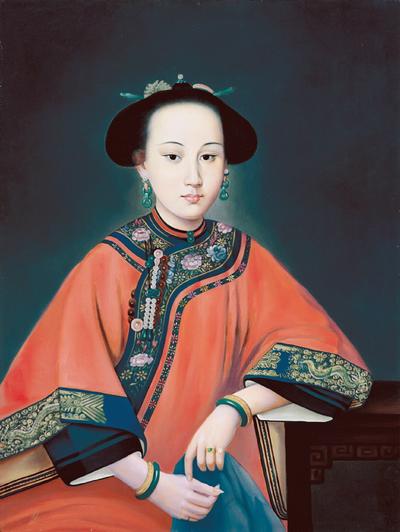
Consort Rong (Chinese: 容妃; pinyin: Róng Fēi) was born on 10 October 1734 and died on 24 May 1788. She was of Uyghur descent, originating from Xinjiang. Her family belonged to the Makhdumzada Khoja clan, which is sometimes transliterated as Hezhuo (和卓) or Huozhuo (霍卓). She was the daughter of the Muslim Hojalai and a descendant of Gambar, the founder of the Shizu sect. She had an elder brother named Turdu.
Her birth date corresponds to the twelfth year of the Yongzheng Emperor's reign, specifically 15 September 1734 according to the lunar calendar, which aligns with the Gregorian date of 10 October 1734.
Lady Hezhuo entered the Forbidden City on 20 March 1760, at the age of twenty-six. At that time, the Qianlong Emperor was 23 years older than she. Her selection for the imperial palace was influenced by her brother Turdu's service; he was honored with a title after assisting in quelling a rebellion in Xinjiang. In 1761, she received the title of "Noble Lady He" (和貴人), and the emperor sent a maid of honour as a wife to her older brother.
In May or June 1762, Lady Hezhuo was promoted to "Concubine Rong" (容嬪). That same year, her brother was made duke of Fuguo in recognition of his aid during the rebellion. She participated in court excursions to Rehe and Mulan Hunting grounds. In 1765, she was part of the emperor’s inspection trip to southern China.
In late 1768, she was elevated to "Consort Rong" (容妃). The emperor ordered a vestibule hat of velvet for her due to a shortage of Manchu court headwear. Special arrangements were made for her, including a Uyghur chef and a Muslim palace with Quranic engravings called Fangwai Guan. A mosque was built for her at the Summer Palace. She took part in tours to Tiashan and Qufu in 1771.
Lady Hezhuo was highly favored by the emperor, who celebrated her 40th birthday in 1774, four months early. During the autumn hunting festival that year, she ranked second among the imperial consorts participating in the tour and held prominent positions at banquets, including leading the western table at an early 1779 banquet at the Old Summer Palace. By the end of 1779, she had risen to second position at the eastern table. In 1784, her 50th birthday was celebrated.
Consort Rong died on 24 May 1788. The day after her death, Grand Secretary Heshen issued an edict for the distribution of her possessions. The emperor inspected her belongings on 26 May. Some items were preserved for future use; others—including jewelry, robes, and silverware—were allocated to Princess Hexiao and Princess Hejing, who were engaged to Heshen’s son. Items were placed in her coffin and on her altar for mourning purposes. Her coffin was relocated from West Garden to Jing'an Zuang, and she was buried in October at the Yu Mausoleum in the Eastern Qing tombs. Her tomb was opened and examined in October 1979, and publicly accessed in 1983. Her coffin bears an inscription of the Quran written in Arabic.
Throughout her life, she held several titles: from her birth during Yongzheng’s reign as Lady Hezhuo, to Noble Lady He in 1761, Concubine Rong in 1762, and ultimately Consort Rong in 1768, according to the ranks of Qing dynasty imperial consorts.