Tsugaru Tsuguakira
| Name | Tsugaru Tsuguakira |
| Title | Japanese Daimyo (1840-1916) |
| Gender | Male |
| Birthday | 1840-09-07 |
| nationality | Japan |
| Source | https://www.wikidata.org/wiki/Q7849981 |
| pptrace | View Family Tree |
| LastUpdate | 2025-11-17T10:08:58.809Z |
Introduction
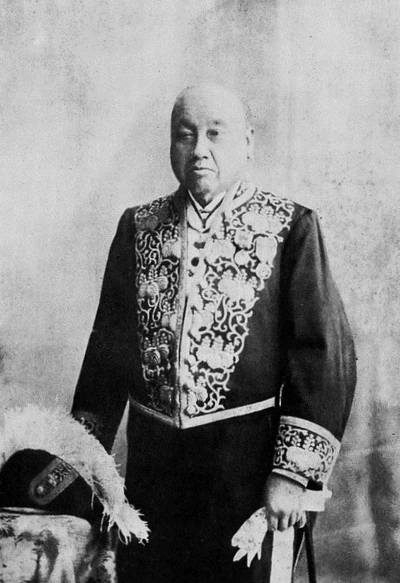
Count Tsugaru Tsuguakira (津軽 承昭; September 7, 1840 – July 19, 1916) was a Japanese daimyō of the late Edo period and early Meiji period. He was the twelfth and final daimyō of Hirosaki Domain, located in northern Mutsu Province, which corresponds to present-day Aomori Prefecture.
Tsugaru Tsuguakira was born on September 7, 1840. He was the fourth son of Hosokawa Narimori, who was the eighth daimyō of Uto Domain, a sub-domain of Kumamoto Domain situated in Kyushu. In 1857, he was adopted by Tsugaru Yukitsugu, the eleventh daimyō of Hirosaki Domain, as the heir to the domain. Tsuguakira married the fourth daughter of Tsugaru Yukitsugu.
He assumed leadership of Hirosaki Domain on February 7, 1859, following the retirement of Tsugaru Yukitsugu. During his tenure as daimyō, Tsugaru Tsuguakira pursued policies aimed at modernizing and westernizing the domain's military forces.
Tsugaru Tsuguakira's rule coincided with the tumultuous Bakumatsu period. Initially, the domain aligned with the pro-imperial Satchō Alliance and took part in military actions against nearby Shōnai Domain. Subsequently, Hirosaki Domain briefly defected to the pro-Tokugawa Ōuetsu Reppan Dōmei but withdrew from the alliance for reasons not documented in the available sources. After realigning with the imperial cause, Hirosaki Domain participated in several key battles during the Boshin War, including the Battle of Noheji and the Battle of Hakodate, fighting on the side of the emerging Meiji government.
Following the Meiji Restoration and the abolition of the han system, Tsugaru Tsuguakira was appointed as the Imperial Governor of Hirosaki from 1869 until 1871, when the territory was incorporated into Aomori Prefecture. Subsequently, he relocated to Tokyo.
In 1882, under the new kazoku peerage system established during the Meiji era, Tsuguakira was granted the title of hakushaku (count). After retiring from public duties, he served as a director of the Number 15 National Bank and was known for his waka poetry.
Tsugaru Tsuguakira died in Tokyo on July 19, 1916. His final resting place is located at Yanaka Cemetery in Taitō-ku, Tokyo. He did not have any biological sons; instead, he adopted Tsugaru Hidemaru, the younger son of the court noble Konoe Tadafusa, who took the name Tsugaru Hidemaru (1872–1919) to serve as his heir.
References for his biography include works by Koyasu Nobushige (1880), Jūjirō Kurotaki (1984), Suegorō Narita (1975), and a commemorative publication by the Tsugaru Tsuguakira Kō Den Kankōkai (1976).
Family Tree
Tap  to expand more relatives